Key points
- Hives is a skin rash that causes raised, red welts known as ‘wheals.’ They are usually very itchy.
- Hives may look and feel unpleasant, but they are usually harmless.
- The most common cause of hives in children is an infection, such as a virus. They are also often caused by an allergic reaction.
- Some children get hives for no clear reason.
- Antihistamine medicines are a safe treatment for children over six months with hives.
- Call an ambulance (000) immediately if your child has hives and symptoms of anaphylaxis.
What are hives?
Hives is a common skin rash that causes raised, red bumps or welts known as ‘wheals.’ The medical name for hives is ‘urticaria’ (er-tuh-care-ia).
Most hives are red or white and look like mosquito bites. They often itch like mosquito bites, too, and sometimes sting. Patches of hives tend to join together, forming larger bumps. They can come and go quickly in one spot, often disappearing
without leaving a mark.
Hives may look and feel unpleasant, but they are usually harmless.
What causes hives?
Hives happen when the body releases a chemical called histamine.
The most common cause of hives in children is an immune system response to an infection – usually a
virus. In many cases, there is no clear reason why a child has hives. This is called idiopathic urticaria.
Other common triggers for hives in children include:
Signs and symptoms of hives
Hives wheals are usually red, or red on the outside and white in the middle. They are normally very itchy but can also sting. Wheals can appear anywhere on the body.
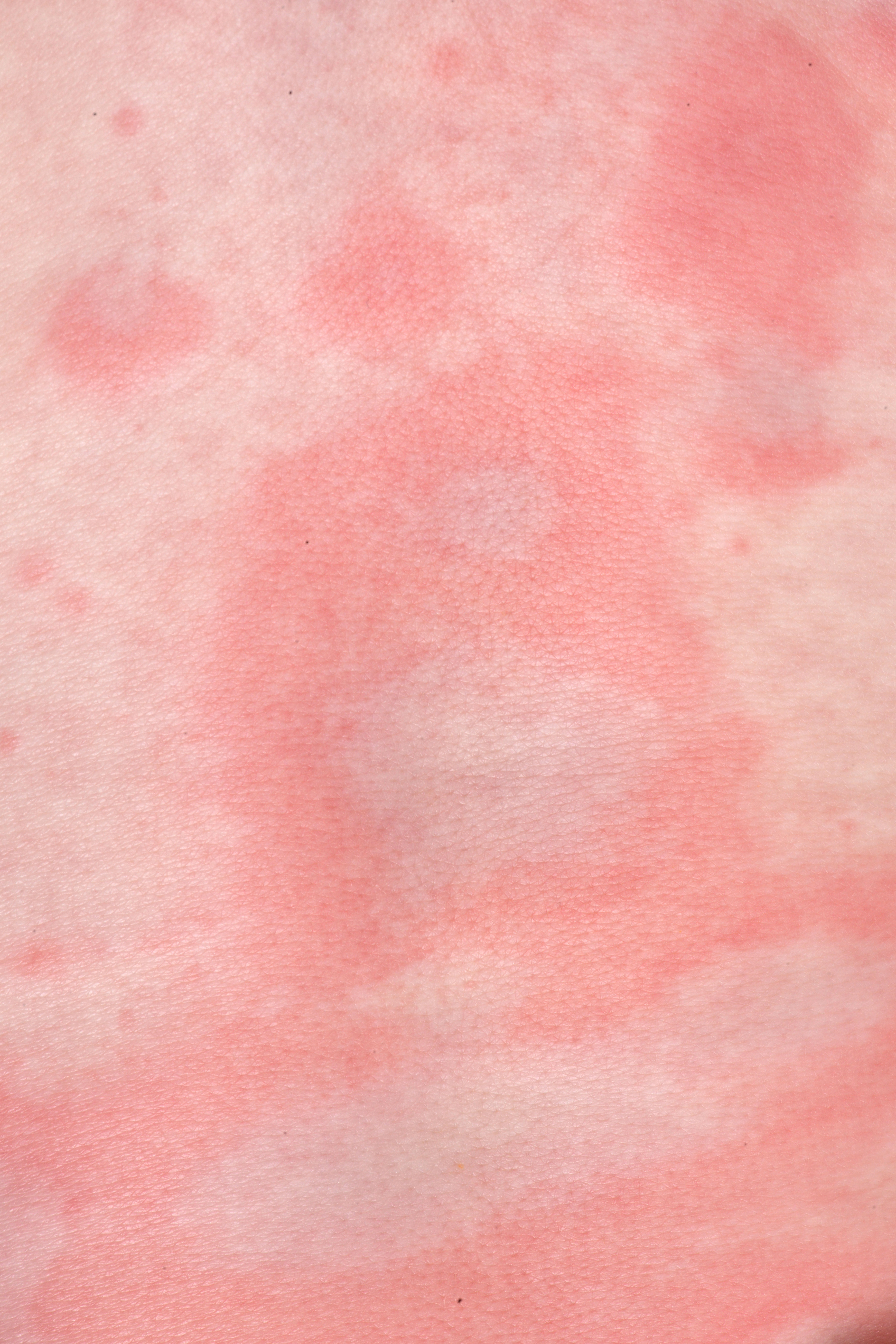
Figure one: Photograph of hives wheals on pale skin.
A single wheal can appear and disappear quickly – within minutes or hours. New wheals may develop as older areas fade. Often, they appear in clusters and join to form larger bumps.
For some children, hives can come and go for days, weeks, or even longer.
Chronic hives
If your child’s hives last more than six weeks, they may have chronic (ongoing) hives – also called chronic urticaria. Treatment for chronic hives depends on the severity of the rash. For example, if your child’s hives interfere with their everyday activities
and cause a lot of distress, they may need care from a specialist doctor such as an allergist.
Hives and allergies
Hives can be one sign of an allergic reaction. This is when the body’s immune system overreacts to a substance, such as a food, medicine or insect sting. If
your child has hives due to an allergy, their hives will usually appear soon after they are exposed to their trigger and fade when they are away from it. Hives from allergies will not last for days or weeks; when your child is away from their allergy
trigger, the hives will stop.
It is best to speak with your child’s doctor if you think they have an allergy. They may suggest allergy testing.
Anaphylaxis
Sometimes, hives can appear as part of a more serious
allergic reaction called anaphylaxis.
Call an ambulance (000) immediately if your child has hives and other symptoms of anaphylaxis, such as trouble breathing, wheezing, dizziness, looking pale or tongue swelling.
How to care for hives at home
You can safely manage your child’s hives at home without seeing a doctor in most cases. However, it is best to speak with a health professional if your child has hives with other symptoms, such as a fever (temperature of 38°C or more).
If you know what is causing your child’s hives, you can help them by:
- Reducing your child's exposure to known triggers or things that make their rash worse, such as sunshine, heat, or hot showers.
- Applying a cool compress to relieve your child’s itching and stinging.
- Use a face washer, cloth nappy, or clean tea towel soaked in cool water.
- Giving your child antihistamine medicine to manage their signs and symptoms.
- These medicines help reduce itching and swelling, and are safe to use regularly.
- Many are safe for children over six months of age.
- Speak with a pharmacist about the best non-drowsy antihistamines for your child.
Paracetamol may also help your child with pain, fever or discomfort if they have a viral illness at the same time. Avoid giving them ibuprofen or aspirin, as they can
make the hives worse.
When to get help
Call an ambulance (000) if:
|
- your child has signs of anaphylaxis, such as trouble breathing and/or noisy breathing, wheeze or persistent cough, throat swelling, dizziness, and/or collapse.
- your child’s tongue is swollen.
|
|
Go to a hospital if:
|
- your child appears very unwell and you are worried.
|
|
See a doctor or health professional if:
|
- your child has had hives for more than six weeks.
- your child has hives and other symptoms like a fever (temperature of 38°C or more), bruising, purple skin discolouration, or joint pain.
- your child has hives that seem to be caused by an allergy.
|
|
Look after your child at home if:
|
- your child’s hives are relieved with treatments like a cool compress and non-drowsy antihistamines.
|
Common questions about hives
Are hives contagious?
Hives are not contagious and cannot spread between people. If someone has hives caused by a virus and other symptoms like a cough, the virus itself may be contagious.
Are there any creams I can put on my child's hives to stop them itching?
Talk to a pharmacist about creams and lotions that may help reduce the intensity of your child’s itching. However, antihistamine medicine will likely help the most.
What is angioedema?
Angioedema is deep swelling under the skin – often around the eyes and lips. Often, people with hives will also have angioedema. Although the swelling can look quite severe,
angioedema is usually temporary and not likely to cause long-term damage. If your child’s tongue is swollen and/or they cannot breathe properly, call an ambulance (000) immediately.
Are my child’s hives likely to be caused by stress?
You may be surprised to learn that stress is very rarely the cause of hives. Stress may make hives worse, but something else usually causes it.
Where do hives usually appear on the body?
Hives can appear anywhere on a child’s body.
Can my child go to childcare or school when they have hives?
If your child is not distressed by their hives or in a lot of discomfort, it is safe for them to go to childcare and school. You may want to give them antihistamine medicine to keep the condition under control and speak with their educators about
what to do if the hives worsen.
My child has had hives before. Are they more likely to get it again?
Children who have had hives and/or angioedema are more likely to have them again in the future, depending on the cause. For example, if the hives were triggered by a viral illness, then these hives may appear again during future viral illnesses.
If the hives were caused by a food allergy and that food is now being avoided, then these hives are less likely to return.
Should I take my child to see an allergy specialist to find out the cause of their hives?
Allergy testing will only help if an allergy is causing your child's hives. For example, if your child only gets hives shortly after eating eggs, and they fade soon after eating, this could be an allergy. When hives last for days, they are less
likely to be caused by an allergy and allergy testing will not be helpful.
For more information
Developed by The Royal Children’s Hospital Allergy and Immunology department, with input from the Emergency department. We acknowledge the input of RCH consumers and carers.
Reviewed June 2026
Please always seek the most recent advice from a registered and practising clinician.