Translated resources
This page is available in two community languages.
Please note: the information on these translated pages is not an exact translation of this page.
Key points
- Many types of worms can live in the intestines, but threadworms are the most common.
- Threadworms are tiny parasites; they are common in preschool and school-aged children.
- They cause very annoying itching around the anus and in the area between a child’s buttocks.
- It is easy to treat threadworms with the right medicine.
- Good hygiene is the best way to stop threadworms from spreading and reinfecting your child.
- It is best to keep your child home from school or childcare until you have treated them for threadworms.
What are intestinal worms?
Intestinal worms are types of worms that can live inside humans. They are parasites that survive by feeding on other living things.
There are many different types of intestinal worms, such as tapeworms, whipworms, and hookworms, but the most common worms in Australia are threadworms.
Threadworms
Threadworms – also called pinworms – are tiny worms that look like white threads. They are about 1cm long. These types of worms are very common in preschool and school-aged children; however, the whole family can get infected.
In most cases, threadworm infections are not serious, and you can easily treat them with over-the-counter medicine.
Signs and symptoms of threadworms
If your child has threadworms, they may have:
- An itchy bottom
- Particularly around the anus
- This can become red and inflamed from scratching
- Trouble sleeping, as the worms come out at night
- Pain and itching – especially at night
- Redness and itching around the vaginal area
These symptoms and lack of quality sleep may make your child irritable.
Diagnosing threadworms
You may be able to see worms in your child’s poo or around their anus at night if you shine a torch on the area. However, if your child has an itchy bottom, there is a good chance they have threadworms.
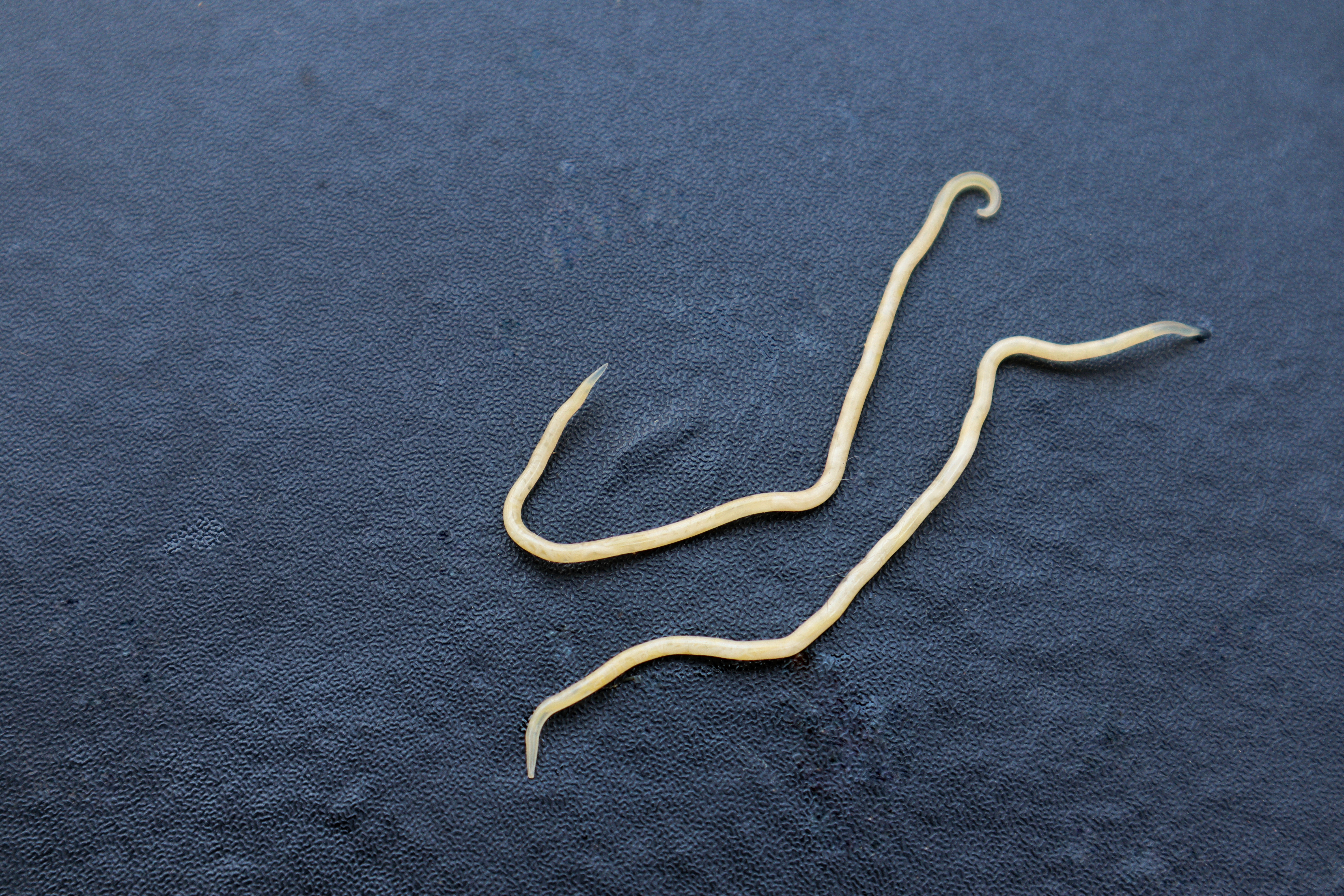
Figure one: Two threadworms up close, approximately 1cm long.
Are threadworms contagious?
Threadworms are very contagious parasites. They live in the bowel and come out of the anus at night to lay eggs between the buttocks. These eggs cause the bottom to feel itchy.
If your child has worms and scratches their bottom, threadworm eggs can collect under their fingernail. This means they can leave eggs on anything they touch – from their mouth to food, toys, and other household items. When they swallow the eggs, the
worms will hatch in their bowel, and the cycle will repeat itself.
Eggs from threadworms can live up to two weeks outside of the body. That is why it is best to treat the whole family for worms if one child has them.
You cannot catch threadworms from animals.
How to care for threadworms at home
If you think your child has threadworms, talk to a pharmacist or your child’s doctor about over-the-counter treatment options. Medicines such as pyrantel or mebendazole are effective and very safe for children over two years old.
- Follow the instructions on the medicine package.
- Treat all the family members at the same time – even if they are not showing any symptoms. Adults often get threadworms from children.
- Tell the pharmacist if you are pregnant or breastfeeding; they may suggest a different treatment.
- Most medicines recommend repeating the treatment on all family members one or two weeks later.
- If threadworm infections keep occurring in your family, consider a third treatment one or two weeks after the second.
- Take your child to see their doctor if several weeks of over-the-counter treatments have not resolved their infection.
Breaking the worm infection cycle
It is common for children to get back-to-back threadworm infections, as the eggs can live for up to two weeks.
The following steps will help to lower the risk of threadworm re-infection and stop the spread to others:
- Encourage your child not to scratch their bottom.
- If they must scratch, make sure it is over their underpants and not directly on their skin.
- Make sure all family members wear underpants at night and change them in the morning.
- Try to get all family members to shower or bathe each morning, if possible.
- Keep everyone’s fingernails clean and trimmed.
- If you can, stop your child from biting their nails or sucking their thumb.
- Make sure everyone washes their hands and under their nails thoroughly after going to the toilet and before eating.
- Wash bedding, towels, and toys in hot water every day for several days after treatment. Try to keep bathroom and kitchen surfaces clean, too.
When to get help
|
See a doctor or health professional if:
|
- over-the-counter medicines have not helped your child.
- you notice a large worm in your child's poo or anus.
- your child has abdominal pain, nausea, vomiting, or low energy.
|
|
Look after your child at home if:
|
- over-the-counter medicine has successfully treated the worms.
- your child seems otherwise healthy.
|
Common questions about threadworms
My child is scratching their bottom, but I have not seen any worms. Should I still treat them?
If your child is scratching their bottom, it is a good idea to treat them for worms – even if you do not see any. It is not harmful for your child to take deworming medicine.
Do I need to deworm my children and my pets at the same time?
Humans cannot catch threadworms from animals. If your pet has threadworms, you do not need to worry about deworming your family. Pets require a different worming treatment than humans; you should speak with a vet for advice.
Are ringworm and threadworms the same thing?
Ringworm and threadworms are not the same thing. In fact, ringworm is not a worm at all – it is a fungus that requires treatment with anti-fungal medicine.
What do threadworm eggs look like?
Threadworm eggs are microscopic and colourless, so it is almost impossible to see them with the naked eye. If you notice eggs around your child’s anus, you are likely seeing thousands of eggs clumped together.
How can I stop the itching from threadworms?
The best way to stop itching from threadworms is to treat the worms. In the short-term, speak with a pharmacist about a soothing cream that is safe to apply to the buttocks. It is very important to wash your hands thorough after applying any cream
to the bottom; you may even want to wear disposable gloves.
How do threadworm treatments work?
The two main threadworm treatments work differently but they work equally well. Mebendazole starves worms by stopping them from absorbing sugar; pyrantel paralyses the worms so they can pass through the bowel and come out in the poo.
It is important to note that threadworm treatments work on adult worms but not eggs. Repeating the treatment will take care of any worms that have hatched from remaining eggs.
Are threadworms dangerous?
Although they are very inconvenient and can cause discomfort, threadworms are not dangerous.
Should I keep my child home from school or childcare while they have threadworms?
It is best to treat your child for threadworms before sending them back to school or childcare.
For more information
Developed by The Royal Children’s Hospital Emergency department, with input from the Infectious Disease department. We acknowledge the input of RCH consumers and carers.
Reviewed April 2026
Please always seek the most recent advice from a registered and practising clinician.