At a glance
- The pill (oral contraceptive pill) is a daily tablet that contains hormones similar to what your body makes.
- There are two main types of oral contraceptive pills. People often call both types ‘the pill.’
- Young people take the pill for lots of reasons, like preventing pregnancy, making their periods lighter, and reducing period pain.
- You can use the pill to skip (purposely miss) your period.
- It’s safe to skip periods with the pill.
- Keep taking the active hormone pills if you get light bleeding or spotting that lasts for two or three days. But if your bleeding keeps going for more than three or four days, or it’s moderate to heavy, it’s best to take a four-day break from the active hormone pills. After four days, you can start taking the active pills again.
What is the pill?
The pill (oral contraceptive pill) is a daily tablet that contains hormones similar to what the body’s reproductive system makes.
Young people take the pill for lots of reasons, like:
How does the pill work?
The pill works by controlling your menstrual cycle. Taking it gives your body a steady supply of some hormones, so you don’t have to make them all every month. It might help to think of the pill like an ‘autopilot’ mode.
There are two main types of oral contraceptive pills. People often call both types ‘the pill.’
- Combined pill: Contains the hormones oestrogen and progestogen.
- Progestogen-only pill: Contains only the hormone progestogen.
Most young people on the pill take the combined pill that contains two hormones.
Oestrogen and progestogen work together inside the body to:
- Stop the ovaries (small organs on either side of the uterus) from releasing eggs
- Thicken the gel-like discharge (mucus) from the cervix
- Thin the uterus (womb) lining
- If your uterus lining is thinner, you might bleed less during your period.
Benefits of the pill
The pill is great at preventing pregnancy and making periods lighter, but it has lots of other benefits, too.
It reduces the risk of:
- ovarian cancer, bowel cancer, and endometrial cancer (lining of the uterus cancer)
- breast cysts and ovarian cysts
- iron deficiency (not enough iron) and anaemia (low red blood cell count)
- getting fibroids (lumps of extra muscle on the uterus)
- endometriosis.
On top of this, the pill can help to:
- protect your bone strength
- clear up hormonal acne.
Facts about the pill
There’s lots of myths and misinformation online about the pill and other types of hormonal contraception.
The truth is that:
- All the oral contraceptive pills you can get today have low doses of hormones compared to those sold years ago.
- The pill won’t ruin your hormones or stop you from having a baby one day, if you choose to.
- When you stop taking the pill, your body will go back to making its own hormones again.
- It’s safe to be on the pill for a long time.
- You don’t need to take a break from the pill every few years, unless you want to.
Why do people skip periods with the pill?
People might skip periods if they:
- Get bad period pain or other symptoms like headaches
- Have heavy periods
- Don't want their period during big events like school formal or sports competitions
- Find it hard to manage their periods
- Have other health conditions that flare up with their period, like asthma, irritable bowel syndrome (IBS), epilepsy, migraines, or mental health problems
- Experience gender dysphoria – where they feel distressed about a difference between their gender identity and their sex assigned at birth.
Some people just don’t want to have periods, and that’s okay, too.
How do I skip periods with the pill?
Skipping a period means purposely stopping your period from coming. It’s safe and easy to skip periods with the pill once you know how each pack works.
What’s in a pill pack?
In Australia, most pill packs come with 28 tablets – the same number of days in an average menstrual cycle.
- 21 or 24 of these tablets will be ‘active’, meaning they contain hormones
- When you take these tablets, you won’t usually get a period.
- 4 or 7 of these tablets will be ‘inactive’, meaning they don’t contain hormones
- When you take these tablets, your hormone levels fall, and your period usually starts a few days later.
- Inactive tablets are only in the pack to help you stay in the habit of taking a pill every day. They don’t contain any medicine.
- You might have heard them called ‘sugar pills.’
The active and inactive pills will be clearly marked on the pack.
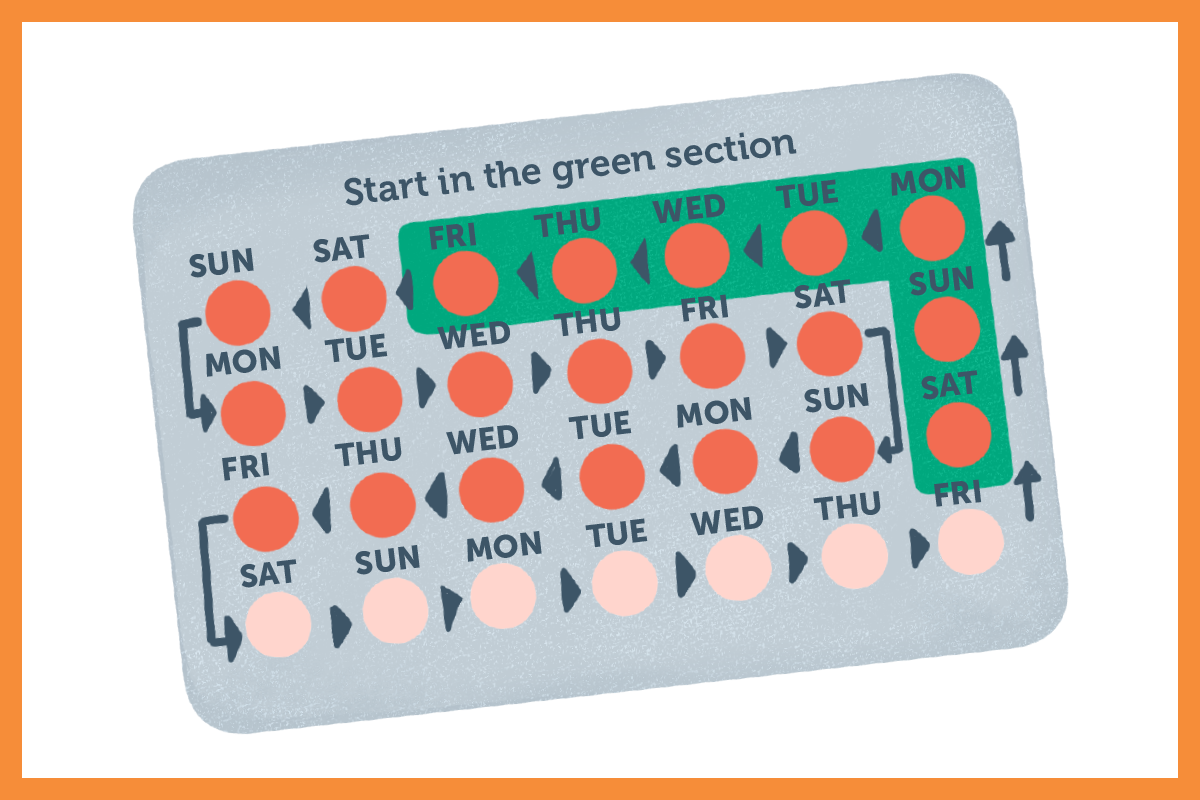
Figure one: Illustration of oral contraceptive pill packet.
To skip a period, don’t take the inactive pills. Instead, skip past the inactive pills and keep taking the active pills. It’s that simple!
Your first month on the pill
When you first start taking the pill, your body needs time to get used to the hormones. It might be easiest to take the inactive (sugar) pills and bleed for your first month on the pill. If you try to skip your period, you might find that you bleed anyway.
If you keep bleeding after your first month on the pill when you don’t expect to, it’s best to speak with your doctor. They might suggest changing pills.
Breakthrough bleeding and spotting
Sometimes, you might try to skip a period and still get some bleeding. This is called breakthrough bleeding. If you only get a very light bleed, this is called spotting. Both breakthrough bleeding and spotting are completely normal, and more common when
you first start the pill.
Is it safe to skip periods with the pill?
It’s perfectly safe to skip periods with the pill. Skipping periods won’t make the blood back up inside your uterus or cause long-term hormone problems. There’s no need to ‘flush out’ the uterus either.
You might naturally skip periods at different times in your life. For example, during pregnancy or while breastfeeding, the body doesn’t usually bleed. Some people might only have 45 periods in their entire life, and others might have 450!
Important things to remember when taking the pill
- Tell your doctor which medicines and supplements you take before you start the pill.
- Some medicines and supplements stop the pill from working properly.
- It's best to take the pill around the same time every day.
- Set an alarm or reminder if you might forget.
- To help you remember, take the pill at the same time as another daily habit, like brushing your teeth or doing your hair.
- If you forget a pill, take it as soon as you remember – even if this means taking two pills on the same day.
- There’s no risk of overdose with an extra pill.
- Taking the pill more than 12 hours late might mean it doesn't work as well to prevent pregnancy.
- You are more likely to get breakthrough bleeding if you miss a pill or take it late.
- Your body might not have absorbed the pill yet if you vomit or have bad diarrhoea (runny poo) within two hours of taking the pill.
- Treat this as a missed pill and take another one.
Possible side effects of the pill in young people
There are some possible side effects of the pill in young people. Some are more common than others, but it’s important to be informed.
- Almost everyone feels nauseated (like they might need to vomit) and has headaches for the first week or so after starting a new pill.
- These effects are common with starting lots of new medicines.
- Breakthrough bleeding – especially in the first few months of taking the pill.
- If you keep getting breakthrough bleeding, speak to your doctor.
- Other effects from the hormones, like mood changes, tender breasts, or feeling hungrier.
- All hormones can cause side effects – whether your body makes them or you take them in the pill.
- The only way to know if you will have side effects from hormones is to try them and see.
- Blood clots (thick clumps of blood) can form in the blood vessels of the veins, lungs, and brain.
- These clots are rare in people who don’t use the pill and only slightly more common in those who do.
Most side effects will go away over time. It’s important to tell your doctor if you have ongoing side effects, as there’s probably a pill with different hormones that will work better for you.
Remember: the first pill you try might not be right for you, but there are lots of options.
I want to start taking the pill. Who do I speak to?
You will need a prescription from a doctor to start taking the pill. Your regular doctor (‘general practitioner or ‘GP’) will be able to give you advice on the right pill for your needs. You could also speak to another health worker, like a school nurse
or a sexual health nurse.
In Australia, there’s no legal age limit for the pill. You can get a prescription if your GP feels that the pill is right for you, and that you understand how to take it properly.
If you are around 14 years or older, you usually have a right to speak to your GP without your parents and to give consent yourself about simple treatments like starting the pill. But it’s usually best to speak with your parents or another trusted adult
beforehand so they can support you.
Things you might be wondering
Can I start taking the pill without telling my parents?
You might be able to start taking the pill without consent from your parents if you are old enough. However, it is usually best to tell your parents so they can support you. Your GP can prescribe you the pill if they feel you understand the choice
you are making and can take responsibility for it. They might also encourage you, or offer to help you, speak to your parents if you feel comfortable.
How do I know if the pill I am taking is right for me?
The first pill you try might not be right for your body. Some people get side effects from one pill but not another – just like you might have painful periods, but your friends might not.
Side effects like headaches or nausea are usually caused by oestrogen in the pill. You might be better taking a different pill or a progestogen-only pill if this is the case for you.
If you have noticed mood changes like feeling grumpy or sad for no reason, this could be due to the progestogen. You might need to try another pill with a different type of progestogen to get rid of these effects. If you think you are having side
effects from the pill, talk with your GP to work out what’s best for you.
Are there risks with taking the pill?
All medicines come with risks. It’s about weighing those risks against the benefits to decide what’s best for you. The pill is lower risk than many modern medicines. Some people might take a progesterone-only pill because of personal risk factors
or family history.
Before you start taking the pill, your GP will tell you about the risks with the pill they are prescribing. You should also read the medicine information that comes in the pill pack.
I started taking the pill for my periods, but now I’m using it to prevent pregnancy. What do I need to know?
If you have started using the pill as a contraceptive to protect against pregnancy, it is best to speak with your doctor. They will be able to give you personalised advice based on the pill you take and your health background.
Even if you take the pill, you should still use barrier protection like condoms when having sex. The pill won’t stop you from getting sexually transmitted infections (STIs) like chlamydia, syphilis, and HIV.
What do I do if I get spotting or breakthrough bleeding when skipping my period?
Keep taking the active hormone pills if you get light bleeding or spotting that lasts for two or three days. But if your bleeding keeps going for more than three or four days, or it’s moderate to heavy, it’s best to take a four-day break from
the active hormone pills. After four days, you can start taking the active pills again.
Remember: if you don’t take the active pills for seven days in a row, you aren’t protected against pregnancy. You will need to use barrier protection like condoms if you have sex any time in the next four weeks, until the pill is working again.
If you often get spotting or breakthrough bleeding, it’s best to speak with your GP.
I always forget to take my pill. What should I do?
You could try setting an alarm or reminder if you often forget to take the pill.
If this doesn't work and you take the pill late most days, speak with your GP. They might suggest a different option that better suits your needs.
What happens to your period when you skip it on the pill?
When you skip your period on the pill, your body simply makes a thin and stable uterus lining that it doesn’t need to shed.
Is it bad for my health to skip lots of periods?
It isn't bad for your health to skip lots of periods. Some people feel better without having periods so often.
You can safely skip your period with the pill as often as you want. You might get some breakthrough bleeding; this isn’t a problem for your health, but it can be annoying. If this is the case for you, it might help to have a period once every
few months.
If you are not sure how to manage breakthrough bleeding on the pill, it’s best to ask your doctor for advice.
Helpful links
Developed by The Royal Children’s Hospital (RCH); medical review by the Gynaecology department, with input from the Kids and Teens Pelvic Pain Clinical Network team. Created with advice from the RCH Health Literacy Youth Advisory Committee.
Reviewed August 2026
Speak with a doctor for up-to-date and personalised medical advice.