Key points
- Children need a range of foods to fuel healthy growth and development.
- School-age children should eat a mix of foods from all five food groups.
- Aim to feed your child vegetables, fruit, grains, lean meat, eggs or nuts, and dairy every day.
- Try to make mealtimes a fun experience and avoid arguing over food.
- Speak with your child’s doctor if you are worried they are not developing as you expect, or they struggle to eat many foods.
Food for school-age children
All children need a balanced diet to help them grow and develop. When they start going to school, the food they eat has a major impact on their memory, focus, mood, energy levels, and ability to learn. If your child eats mostly foods that give them short-term energy, they may struggle to pay attention in class and retain information.
The eating patterns your child forms while they are young will continue into adulthood. That is why it is so important to feed them a balanced diet, with many different flavours and textures.
What are nutrients?
All foods are made of nutrients. In school-age children, nutrients provide the energy to learn and play. They also help the immune system to fight germs like viruses that often spread at school.
There are two main groups of nutrients:
- Macronutrients: Nutrients the body needs in large amounts, such as carbohydrates, proteins, and fats.
- Micronutrients: Nutrients the body needs in smaller amounts, such as vitamins and minerals.
Balanced diets include a mix of macro and micronutrients. Many foods contain both. For example, fish is a good source of protein, but it also has calcium, iron, and vitamins.
Essential nutrients for school-age children
Some nutrients are more important for school-age children than others. Here are some examples:
Vitamins A, B, C, D, E, and K
Children need to eat a diet rich in vitamins. While each vitamin plays a slightly different role in the body, they all work together to support your child’s health.
- Vitamin A: Helps with eyesight and growth. Found in green, leafy vegetables like spinach.
- Vitamin B (especially B1, B2, B3, B6, B12): Helps with many functions, from making red blood cells to turning food into energy. Found in meats, dairy, and whole grains.
- Vitamin C: Helps with fighting infections. Found in vegetables and fruits – especially capsicums and citrus fruits.
- Vitamin D: Helps with absorbing calcium for strong bones. Found in eggs and some fish, but the skin makes it when exposed to the sun.
- Vitamin E: Helps with the immune system. Found in nuts and seeds, such as almonds.
- Vitamin K: Helps with blood clotting. Found in green, leafy vegetables like broccoli.
It is generally better for your child to get vitamins from food than from supplements. This is because vitamins in food are easier for the body to absorb and contain other beneficial nutrients. Supplements can contain harmful ingredients and may contain higher levels of vitamins than what your child needs.
Calcium
Calcium is a key mineral for building strong bones and teeth. It also helps with other processes, such as sending signals between the brain and other parts of the body. Calcium intake is important at every age, but children in particular need a calcium-rich diet to support their growth. If they do not get enough calcium, the body will take it from the bones, increasing the risk of breaks and other conditions later in life. Dairy is the best source of calcium. If choosing plant-based alternatives, make sure they have added calcium. Some other foods, like broccoli, also provide calcium, but in much smaller amounts.
What should I feed my child?
The five food groups
The most important thing to remember when it comes to food is balance. As a guide, try to feed your child a mix of foods from the ‘five food groups.’ These are:
- Vegetables and legumes/beans – aim to feed your child four and a half to five serves a day
- One serve = Half a cup of cooked broccoli.
- Fruit – aim to feed your child one and a half to two serves a day
- One serve = One medium-size apple.
- Grain (cereal) foods, mostly wholegrain – aim to feed your child four to five serves a day
- One serve = One slice of wholegrain bread.
- Lean meat and poultry, fish, eggs, nuts and seeds – aim to feed your child one and a half to two and a half serves a day
- One serve = One cooked fish fillet (approximately 100g)
- Milk, yoghurt, cheese and/or alternatives – aim to feed your child one and a half to three serves a day
- One serve = Two slices of cheese.
Your child does not need to eat food made a certain way – every culture has different traditions and recipes. Focus on the ingredients you put into each dish.
Processed versus unprocessed foods
The NOVA system groups food into four main categories: unprocessed or minimally processed foods, processed culinary ingredients, processed foods, and ultra-processed foods. These categories explain how much foods are changed from their original state and why.
- Unprocessed or minimally processed foods = Unprocessed foods are foods in their natural state, such as fresh fruits and vegetables. They are also called ‘whole foods.’ Minimally processed foods are foods changed a little from their natural state. They may be altered using methods such as drying, roasting, or boiling – usually to make them last longer or safer to eat.
- Processed culinary ingredients = Any foods changed from their natural state so they can be used in a certain way; for example, olive oil, sugar, and salt. They are not usually eaten on their own.
- Processed foods = Any foods changed from their natural state that can be eaten on their own – usually by adding other ingredients such as salt. They are often safer, tastier, last longer, or easier to eat. For example, canned tuna in oil.
- Ultra-processed foods = Ready-to-eat food products made in factories. They usually include many ingredients you do not use at home, such as colour and flavour enhancers, along with preservatives to make them last a long time. Hot dogs, instant noodles and flavoured potato chips are all ultra-processed foods.
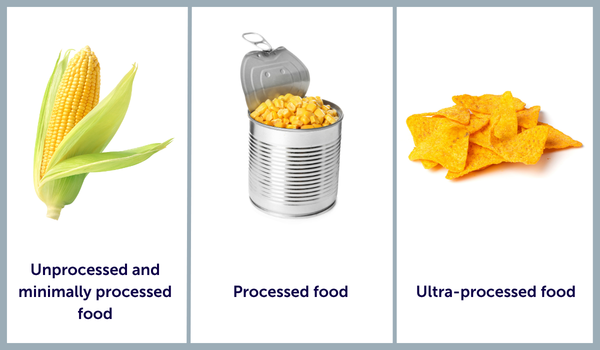
Figure one: Image showing three different forms of corn, from unprocessed to ultra-processed.
Many types of processing can remove nutrients like fibre, water, vitamins and minerals, and add things like salt and sugar. Try to feed your child as much unprocessed and minimally processed food as possible. However, processing is not always a bad thing. For example, pasteurising milk is a form of processing; it involves heating milk for a few seconds to kill germs without changing its nutritional value.
Fortified foods
Companies may add nutrients to foods to boost their benefits. These are called ‘fortified foods.’ For example, dairy alternatives are often fortified with calcium, so people who do not consume dairy still get enough calcium in their diet.
Drinking water
Water is the most important nutrient. It helps balance salt and nutrient levels and aids in digestion. Ideally, your child should drink around five to six cups of water, or 1.25 to 1.5L (litres), each day. They will need more if the weather is hot or they are very active.
Limit how much fruit juice, soft drinks (fizzy drinks); they are usually high in sugar. You should also avoid giving your child caffeine – it can affect their mood, sleep, and behaviour.
Building healthy food habits
The things your child learns about food will impact their relationship with eating as they get older.
- Always try to eat dinner together as a family, if possible.
- There are many benefits to family mealtimes. Research has linked family dinners to healthier food choices and better mental health. They are also a great opportunity to connect and socialise with your children.
- Set a good example by eating healthy foods around your child.
- Try not to talk to your child about foods you do not like; this may influence their opinion.
- Encourage your child to eat until they are full. There is no need to force them to eat or ‘clean their plate’ – this can teach them to ignore their natural hunger cues and overeat.
- Prepare foods in a variety of ways.
- You may find your child eats something they used to dislike when you change the texture. For example, grating carrot instead of chopping it into big chunks.
- Speak to your child calmly about food and meals. If your child is upset or refusing to eat, explain their options, but try not to argue.
- Aim to make one dish for the whole family. You can modify ingredients to suit the needs of each family member, but try not to cook entirely separate meals for different people if you can.
- For example, you could roast some sweet potatoes for yourself and mash them for your child.
Teaching your child about healthy eating
- Share simple health messages with your child.
- For example, telling them that drinking milk helps build strong bones.
- Avoid using terms like ‘good foods’ and ‘bad foods’; instead, focus on nutritional value.
- Encourage your child to get involved with what they eat.
- Ask them to choose recipes, help with grocery shopping, and make their own snacks. For example, they could prepare a snack plate with cheese and vegetables.
- Teach your child how to cook.
- Set some basic safety rules, such as no running in the kitchen or using the stove alone.
- Get them to help you with simple recipes and food preparation. As they get older and more comfortable in the kitchen, you can give them more tasks. For example, start by showing them how to measure ingredients and later, teach them how to chop vegetables.
- When they are ready, encourage them to take the lead when cooking. You can supervise for safety and share tips along the way.
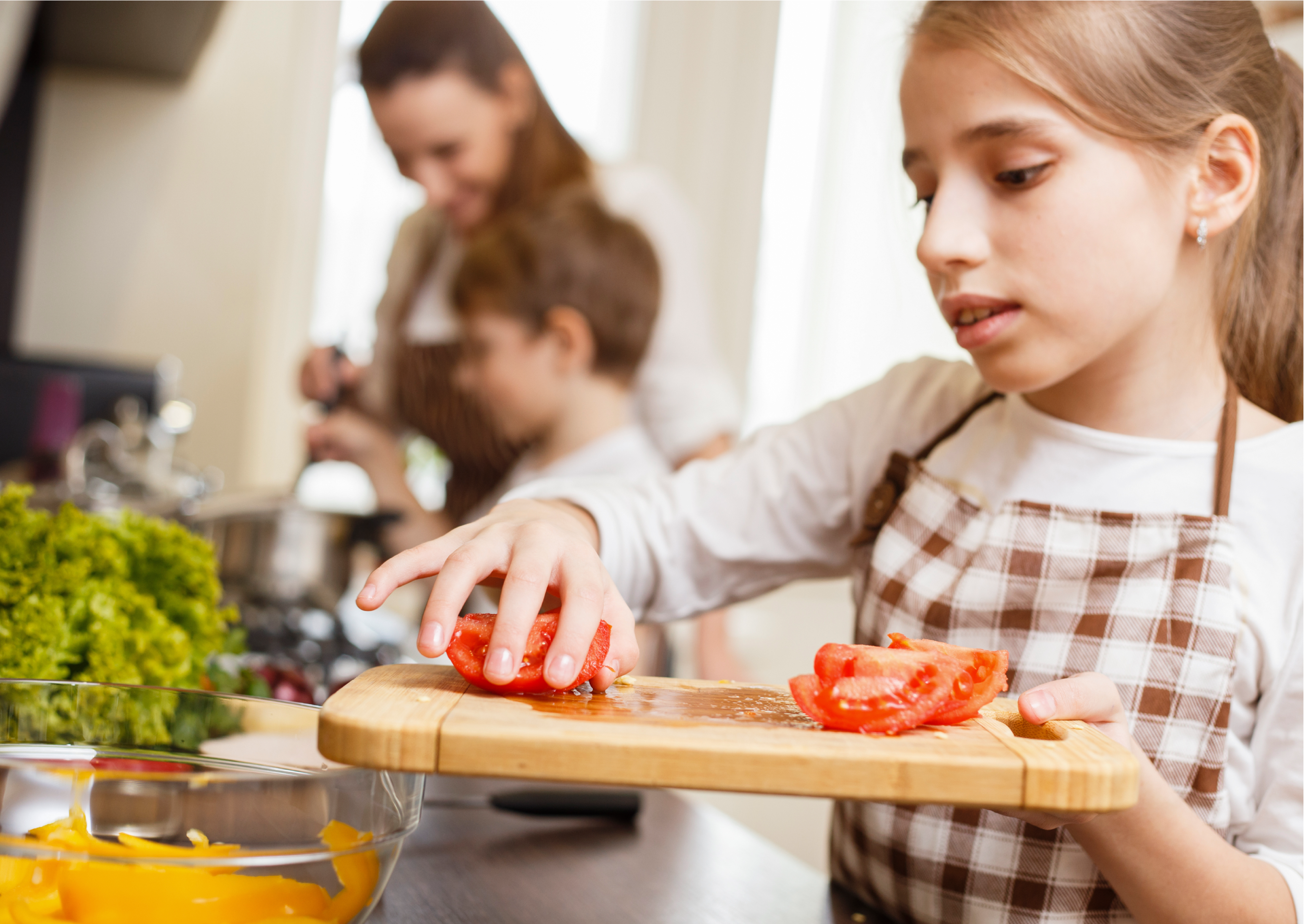
Figure two: Young girl putting chopped tomatoes into a bowl while cooking.
When to get help
|
See a doctor or health professional if:
|
- your child has signs of a food allergy, such as a rash, tingling feeling in or around their mouth, or facial swelling.
- you do not think your child is eating a balanced diet and you are worried about nutrition deficiencies.
- your child struggles to eat many foods.
- you are worried your child is not growing or developing as expected.
|
|
Look after your teen at home if:
|
- they eat a balanced diet with enough essential nutrients.
- they are growing and developing as expected.
|
Common questions about nutrition for school-age children
How much food should my child eat each day?
There is no perfect amount for children to eat. As a guide, plan to give them three meals per day and two or three healthy snacks. If they do a lot of activities, such as playing sports, they will likely be hungrier.
Should I be worried about my child eating too many calories?
Rather than counting the number of calories your child is eating, it is better to focus on feeding your child a mix of foods from all five food groups and prioritise unprocessed foods. Diets and fasting are also not recommended for children.
Are all processed foods unhealthy?
While some processed foods are nutritious – such as yoghurt – many forms of processing can lower a food’s nutritional value. This means that your child may not be getting all the nutrients they need if their diet is high in processed foods. For example, many fruit juices are not nutritious because processing fruit into juice removes a lot of the fibre, vitamins and minerals, and adds sugar.
Is it safe for my child to eat a vegan or plant-based diet?
Before your child starts any plant-based diet, you should speak with their doctor or a registered dietitian for advice. They will work with you and your child to make sure they get all the nutrients they need and may suggest supplements to fill any gaps.
If your child is vegan, you should pay special attention to their iron, calcium and vitamin B12 intake. Vitamin B12 is critical for many bodily functions, but it is only naturally found in animal products. Your child should eat foods fortified with vitamin B12 and/or take a supplement. Speak with their doctor for advice.
I think my child has a food allergy. Should I avoid feeding them certain foods?
It is best to speak with your child’s doctor before cutting out food groups to prevent allergies. If your child is diagnosed with a food allergy or intolerance, a doctor or dietitian will help you ensure they get the nutrients they need for healthy development. Eliminating food groups at an early age can lead to unhealthy eating habits later in life.
Is it good to restrict my child from eating sugar?
It is best to focus your child's diet on whole foods and limit foods with added sugar. However, there is no need to cut added sugar completely. Treat foods like pastries and chocolate can be enjoyed sometimes as part of a balanced diet.
My child hates sandwiches. What can I pack them for school lunch?
Sandwiches are an easy school lunch option, but not all children like them. Before you rule out any bread option, ask your child what they do not like about sandwiches. They may just not like the way certain sandwiches get soggy; in which case, you could use a bread roll or swap the filling. Flat breads and rice cakes are good alternatives to sandwiches. Simply top with something nutritious, such as avocado or tuna.
What are some school snack ideas?
Chopped fruit and vegetables are great school snacks that will give your child energy throughout the day. You can also add some dip for the vegetables, such as hummus. Homemade muffins are a good way to pack extra nutrients into your child’s diet if you have time for baking – just add fruit or grated vegetables. Limit processed snack foods; if you need to buy snacks from the supermarket, popcorn is a much better option than chips.
My child is a very fussy eater. Will they grow out of it?
It can be hard to get your child to eat new foods. One day, they may be open to trying something new, and the next, they may not want to touch it. Patience is the key. You may need to offer your child a new food many times before they accept it. Try to stay calm and avoid forcing them to eat. This can make mealtimes a stressful experience for them.
If you are having trouble getting your child to eat anything new, or you are worried they are not growing as expected, speak with their doctor.
My child is neurodivergent and they will not eat many foods. What can I do?
Mealtimes can be tricky for some neurodivergent children. They may find certain flavours and textures overwhelming. This is not just a child being fussy. Small changes may help your child eat more foods, such as feeding them in quiet spaces and serving food at their preferred temperature. However, it is best to speak with your child’s doctor to rule out other health conditions. They may refer you to a specialist such as a paediatrician, occupational therapist, or dietitian who can support you and your child.
For more information
Developed by The Royal Children’s Hospital (RCH) Nutrition and Food Services department. We acknowledge the input of RCH consumers and carers.
Reviewed April 2026
Please always seek the most recent advice from a registered and practising clinician.