Key points
- Elastomeric infusion pumps deliver medicine to the body through a vein. They are often used when your child still needs intravenous (IV) treatments, but they are well enough to go home.
- The Baxter Infusor System is one of the most common infusion pumps used at The Royal Children’s Hospital (RCH).
- Elastomeric infusion pumps need to be changed every day by a nurse.
- Monitor the balloon in your child's pump to check it is deflating.
- If your child is an RCH patient and you do not think the pump is working properly, call Wallaby ward immediately on 03 9345 4770. Support is available 24 hours a day.
What is an elastomeric infusion pump?
Elastomeric infusion pumps deliver medicine to the body through a vein. They are convenient and portable, and do not require electricity to work. Many people call them ‘Baxters’ for short, as the Baxter Infusor System is one of the most common elastomeric
infusion pumps.
Most elastomeric pumps need to be changed daily by a nurse. If your child is a patient at The Royal Children’s Hospital (RCH), a nurse will visit you at home to do this as part of the Wallaby (Hospital-in-the-Home) program.
Who needs an elastomeric infusion pump?
A health professional may suggest an elastomeric infusion pump if your child is well enough to leave hospital, but they still need intravenous (IV) medicine. At the RCH, elastomeric pumps are mostly used to provide antibiotics.
Elastomeric pumps can usually be used to give antibiotics to children of all ages.
How do elastomeric infusion pumps work?
Elastomeric infusion pumps deliver medicine through an intravenous (IV) line into a big vein in the body. It has a small ‘balloon’ inside that slowly drips the medicine through the IV line. The balloon will get smaller until it is empty or the line is
clamped.
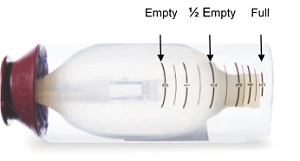
Figure one: Elastomeric infusion pump with markings.
A nurse will attach the pump to your child’s IV line before they leave hospital. It needs to be changed each day as the contents only last about 24 hours.
How to care for elastomeric infusion pumps at home
- Always keep the pump, line and IV site clean and dry.
- Make sure the pump is at room temperature, away from extreme heat or cold.
- Extreme temperatures can affect the way the balloon inside the pump deflates.
- Secure the line to your child and ensure it is out of their reach, so they cannot fiddle with it.
- Nursing staff will show you how to do this before your child leaves the hospital.
- You may find it easier to put the pump in a small backpack or waist pouch when your child is moving around.
- Keep the line and pump away from pets that might chew or play with it.
- Ensure the line is never kinked, pulling, dangling, or at risk of catching on things.
Water and bathing
Do not submerge the pump under water or get it wet. Keep it out of the shower, bath, and pool. When your child is showering, keep the pump outside the stream of water by placing it on a bench or chair. If bathing, sit the pump outside of the bath.
Sleeping
Keep the pump at the same level as the site where it enters the body. For example, put it on its side next to your child’s pillow. Make sure the pump is on top of the bed covers; putting it underneath the covers can make the device too warm.
Exercise
Your child can exercise with an elastomeric infusion pump, as long as it stays clean and dry, and does not get damaged. It is best for your child to avoid rough and contact sports while they have a pump.
Travel
Elastomeric infusion pumps are safe to take on aeroplanes with pressurised cabins. However, it is important to tell your child’s care team if you have travel plans so they can organise ongoing care at your destination, if required.
Possible problems with elastomeric pumps
If your child is an RCH patient, you can call Wallaby ward for advice on 03 9345 4770. Support is available 24 hours a day.
Call an ambulance (000) immediately in a medical emergency, or take your child to the nearest emergency department.
The line gets disconnected from the pump
If the line gets disconnected from the pump, do not try to reconnect it. If your child is an RCH patient, call Wallaby ward immediately. Otherwise, take them to your nearest hospital emergency department.
Keep the line as clean as possible in the meantime, and avoid letting it touch anything.
The balloon is not deflating
If the balloon in your child’s pump is not deflating, check that the:
- line is not kinked
- pump is not too far below the height of the IV site.
- line is still attached to the IV site.
Seek advice if you cannot resolve the problem. Call Wallaby ward if your child is an RCH patient or take them to your nearest hospital emergency department.
The pump is leaking
Place the pump in a clean plastic bag if it starts leaking and speak with a health professional. If your child is an RCH patient, call Wallaby ward or take them to your nearest hospital emergency department.
Other pump problems
Call Wallaby ward for advice if your child is an RCH patient, or take them to the nearest emergency department if the pump:
- is cracked or the balloon inside has burst
- has expired
- does not have your child’s correct information on it
- is not working properly, and you do not know what to do.
Common questions about elastomeric infusion pumps
Is it painful for a child to have an elastomeric infusion pump connected?
It is completely painless for a child to have an elastomeric infusion pump connected. The process is very similar to having an IV line connected to a syringe or infusion.
Can my child go to school with an elastomeric infusion pump?
Some children can go to school with an elastomeric infusion pump. It usually depends on your child’s age and whether they can follow advice without supervision. Speak to your child’s care team, or call Wallaby ward on 03 9345 4770 if your child
is an RCH patient. They can contact your child’s school to provide further information if required.
What happens if the balloon is empty before the nurse arrives to change the infusor?
You do not need to do anything if the balloon is empty before a nurse arrives to change the infusor. It is safe to leave the infusion pump connected to the line. The Wallaby ward will book visits to RCH patients within the same window of time
each day.
If the balloon is empty in a much shorter time than expected or usual, you should notify your child’s care team. For RCH patients, call Wallaby ward on 03 9345 4770; otherwise, take your child to the nearest emergency department.
How do I know if my child’s infusion pump is working properly?
Some infusion pumps work differently to others. Your child’s nurse will tell you the signs that the pump is working correctly when they connect it. It is a good idea to check the pump before bed and in the morning to ensure it is working as expected.
For more information
Call an ambulance (000) immediately in an emergency.
Developed by The Royal Children’s Hospital Wallaby (Hospital-in-the-Home) department. We acknowledge the input of RCH consumers and carers.
Reviewed June 2026
Please always seek the most recent advice from a registered and practising clinician.