See also
Electrolyte abnormalities
Basic paediatric ECG interpretation
Key points
- Severe hypocalcaemia can cause life-threatening arrhythmia or seizures
- Commence cardiac monitoring in cases of severe and/or symptomatic hypocalcaemia or if changes on ECG
- The oral/enteral route is preferred for replacement of calcium, unless severe hypocalcaemia
- Seek specialist advice in children with symptomatic hypocalcaemia
Background
- This guideline does not cover hypocalcaemia in neonates <1 month of age
- Hypocalcaemia is defined as a total calcium <2.2 mmol/L or an ionised calcium <1 mmol/L. The onset of symptoms in hypocalcaemia typically occurs with a total calcium <1.8 mmol/L
- Less than 1% of the body’s total calcium is in the extracellular fluid. Half of the extracellular calcium is bound to albumin, and the other half is in its ionised active form
- The most common causes of hypocalcaemia are vitamin D deficiency and parathyroid hormone (PTH) deficiency
Common causes of hypocalcaemia
| Low PTH |
High PTH |
Other causes |
Abnormal parathyroid gland development
Autoimmune parathyroidism
Post surgical thyroidectomy or parathyroidectomy
Syndromic hypoparathyroidism (22q11.2 deletion syndrome, CHARGE syndrome) |
Vitamin D deficiency/rickets
Malnutrition
Chronic kidney disease
Resistance to PTH |
Sepsis
High phosphate
Low or high magnesium
Drugs including bisphosphonates, calcitonin
Metastasis/tumour lysis syndrome
Pancreatitis
Blood transfusion |
Assessment
History
- Hypocalcaemia can be chronic and/or asymptomatic, or it can present with acute/severe symptoms and signs
- Paraesthesia, peri-oral tingling or tingling of hands and feet
- Muscles aches or cramps
- Irritability, mood changes, poor concentration
- Abdominal pain, diarrhoea
- Stridor, apnoea
- Palpitations, arrhythmia, syncope
- Confusion, agitation, delirium, seizures
- Assess for possible causes (see table above)
Examination
- Tachycardia, bradycardia, arrhythmia
- Spasm/tetany
- Hyperreflexia
- Positive Trousseau sign (see additional notes)
- Craniofacial features and midline defects including cleft
Assessment of severity
- Severity is determined by total calcium level and symptoms
- If any severe features present, treat as severe despite the calcium level
| Severity |
Total calcium (mmol/L) |
Common features |
| Mild |
<2.2 |
Asymptomatic |
| Moderate |
<1.8 |
Paraesthesia
Muscle cramps
Tetany |
| Severe |
<1.6 |
Arrhythmia
Stridor, apnoea
Confusion, agitation, seizures |
Investigations
If possible, collect all prior to calcium replacement
First line investigations
- Corrected calcium (also order albumin if required by local laboratory)
- Ionised calcium (venous or capillary blood gas)
- Magnesium, phosphate
- PTH
- 25 hydroxy vitamin D
- UEC
- ECG to identify conduction abnormalities (see Basic paediatric ECG interpretation). Look for QTc prolongation, arrhythmia, atrial fibrillation, torsades de pointes
Second line investigations
- ALP
- Albumin
- 1,25 vitamin D
- Urinary calcium:creatinine ratio
Other investigations will depend on suspected causes
Treatment
Goals are to
- prevent life threatening complications
- replace calcium deficit. Enteral replacement is preferred unless severe hypocalcaemia
- identify and treat reversible causes
Children with moderate to severe hypocalcaemia require ECG monitoring and IV access
Calcium should be replaced if
- corrected calcium <2.0 mmol/L or ionised calcium <1.0 mmol/L
- signs and symptoms of hypocalcaemia and/or ECG changes
Address any abnormalities of magnesium and potassium. Untreated hypomagnesaemia can make hypocalcaemia resistant to treatment. See Hypomagnesaemia
Route of administration
Oral/enteral route
- This is the preferred route of calcium replacement
- Should be given with food
IV calcium should be considered if
- Severe acute hypocalcaemia
- Presence of ECG changes
Oral/enteral dosing
|
Initial management |
Monitoring |
| Acute replacement dose |
1 month-12 years, elemental calcium 10-20 mg/kg oral qid. Increase as required. May require doses up to 120-200 mg/kg/day
12-18 years, elemental calcium 1-2 g oral daily in 3 or 4 divided doses
See below for calcium carbonate preparations and equivalent elemental calcium
Add calcitriol*: 0.015 microg/kg (max 0.25 microg) daily |
Clinical and biochemical monitoring of phosphate and calcium every few days until stable, then every 1-2 weeks |
| Maintenance dose/ recommended daily intake |
Elemental calcium:
1-3 years, 500 mg oral
4-8 years, 700 mg oral
9-11 years, 1000 mg oral
12-18 years, 1300 mg oral |
Clinical and biochemical monitoring 6 monthly |
* Note: Calcitriol is the most active form of vitamin D and increases absorption of calcium in 1-2 days
Oral medication forms
See below for examples of oral tablet preparations of calcium carbonate
| Preparation |
Elemental calcium content per tablet |
Cal-500®
Cal-Sup® (chewable) |
500 mg (1250 mg calcium carbonate) |
| Cal-600® |
600 mg (1500 mg calcium carbonate) |
- Other products containing different amounts of calcium (and/or cholecalciferol) may be available. Check ingredients and strengths carefully
- Some hospitals may have access to calcium carbonate oral liquid or calcium carbonate effervescent
- Calcitriol is available as a 0.25 microgram capsule
IV replacement
Should be considered in severe acute hypocalcaemia
- Requires monitoring with frequent calcium levels, ECG and observations including heart rate
- Switch from IV to oral route as soon as child is stable
- Risk of necrosis if extravasation occurs. Both calcium chloride and calcium gluconate are vesicants. Calcium gluconate is less irritating to veins and preferred if central venous access is unavailable
- Rapid administration may cause vasodilation, hypotension, bradycardia, arrhythmias and cardiac arrest
- Aim to increase and stabilise calcium levels to a safe range: corrected calcium >1.8 or ionised calcium >1.0
Severe hypocalcaemia
| Medication |
Administration |
Continuous infusion
Discuss with ICU or retrieval service if requiring IV infusion |
Calcium gluconate
(2.2 mmol/10 mL) |
1 month-18 years
Give via large vein IV or intraosseous
0.07 to 0.14 mmol/kg (max 4.4 mmol) over 10-60 minutes
Repeat every 4-6 hours if required until asymptomatic*
In an ICU setting, may be given IV undiluted via a central line as a slow push over 2-5 minutes |
May need to follow with an IV infusion at a rate of 0.44-1.76 mmol/kg/day
Check calcium levels every 6-8 hours initially to assess treatment efficacy |
| Calcium chloride 10% |
1 month-18 years
Give via a large vein IV or intrasosseus
0.07-0.14 mmol/kg (max 6.8 mmol) over at least 6 minutes
In an ICU setting, may be given undiluted over at least 3 minutes (maximum rate 0.68 mmol/minute) |
May need to follow with an infusion at a rate of 0.5-1 mmol/kg/day
Check calcium levels every 6-8 hours initially to assess treatment efficacy |
*Calcium level to be checked prior to each infusion
Medication forms
| Preparation |
Elemental calcium content |
Dilution |
| Calcium gluconate 93.1 mg/mL |
0.22 mmol/mL |
Dilute to 0.11 mmol/mL or weaker using appropriate solutions* |
| Calcium chloride 100 mg/mL |
0.68 mmol/mL |
Dilute to 0.14 mmol/mL or weaker using appropriate solutions# |
*Solutions compatible for dilution with calcium gluconate include 5% glucose, 0.9% sodium chloride, or glucose and saline solutions
# Solutions compatible for dilution with calcium chloride include 5% glucose and 0.9% sodium chloride
Consider consultation with local paediatric team when
- The child is symptomatic or there is moderate to severe hypocalcaemia
- The child is <1 month of age
Consider consultation with endocrinology team when
- Child is <1 month of age
- Severe or symptomatic hypocalcaemia
- If a cause other than vitamin D deficiency is suspected
Consider transfer when
- Ionised calcium <1.0 or corrected calcium <1.8
- Symptomatic hypocalcaemia
- Significant ECG changes including prolonged QT or arrhythmia
- Risk of arrhythmia
- Neonates
- Child with complex medical condition
- Child requiring care beyond the comfort level of the hospital
For emergency advice and paediatric or neonatal ICU transfers, see Retrieval Services
Consider discharge when
- Asymptomatic and stable corrected calcium >1.8 mmol/L
- Plan for ongoing monitoring and follow-up of investigations for underlying cause
Parent information
Vitamin D
Additional notes
Positive Trousseau sign
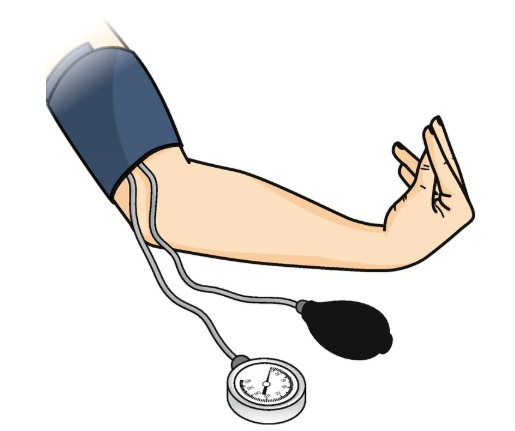
Figure 1: Positive Trousseau sign is associated with hypocalcaemia. Trousseau sign is characterised by occurrence of carpopedal spasms (wrist flexion, metacarpophalangeal flexion, and finger adduction) on inflation of blood pressure cuff to 20 mmHg above child’s baseline systolic blood pressure for 2 to 3 minutes
Last updated July 2026