At a glance
- Nicotine is an addictive drug; it's either from the tobacco plant or made in a lab.
- Common nicotine products are cigarettes, vapes, snus, and tobacco pouches.
- Most vapes labelled ‘nicotine-free’ still have some nicotine in them. This makes it impossible to know how much is inside.
- In young people, nicotine can rewire the brain and cause many health problems – from headaches to dizziness, vomiting, and long-term mental health issues.
- There are lots of resources to help you quit nicotine.
- Call an ambulance (000) immediately if you find it hard to breathe.
What is nicotine?
Nicotine is a very addictive drug that speeds up activity in the brain. It’s a type of ‘stimulant’ drug, in the same group as cocaine and ice (crystal methamphetamine).
Most nicotine comes from tobacco plants, but this doesn’t mean it’s safer or healthier than other drugs. There’s also a type of artificial nicotine made in a lab; it’s used more in vapes.
What is tobacco?
Tobacco is a green, leafy plant in the same family as tomatoes. It contains different chemicals, including nicotine.
Farmers grow and harvest tobacco, then dry out the leaves. They use the dried leaves to create products like cigarettes.
It’s against the law to buy or use tobacco products under the age of 18 without a prescription. This includes cigarettes and vapes – even if the vape says it’s ‘nicotine-free.’
Common nicotine products
People usually think of nicotine in cigarettes, but it’s in lots of different products. Usually products labelled as nicotine-free, like vapes, still contain nicotine because the government doesn’t check or regulate them. This makes it impossible to know
how much nicotine you are having, and why it’s so hard to quit.
Things you smoke or inhale
Things you put in your mouth or nose
- Snus (pouches with tobacco and nicotine)
- Nicotine pouches (pouches with nicotine only)
- You might know these by the brand name Zyn
- Chewing tobacco
- Sniffing tobacco (snuff)
- Tobacco rubbed on the gums (dip)
- Nicotine gummies.
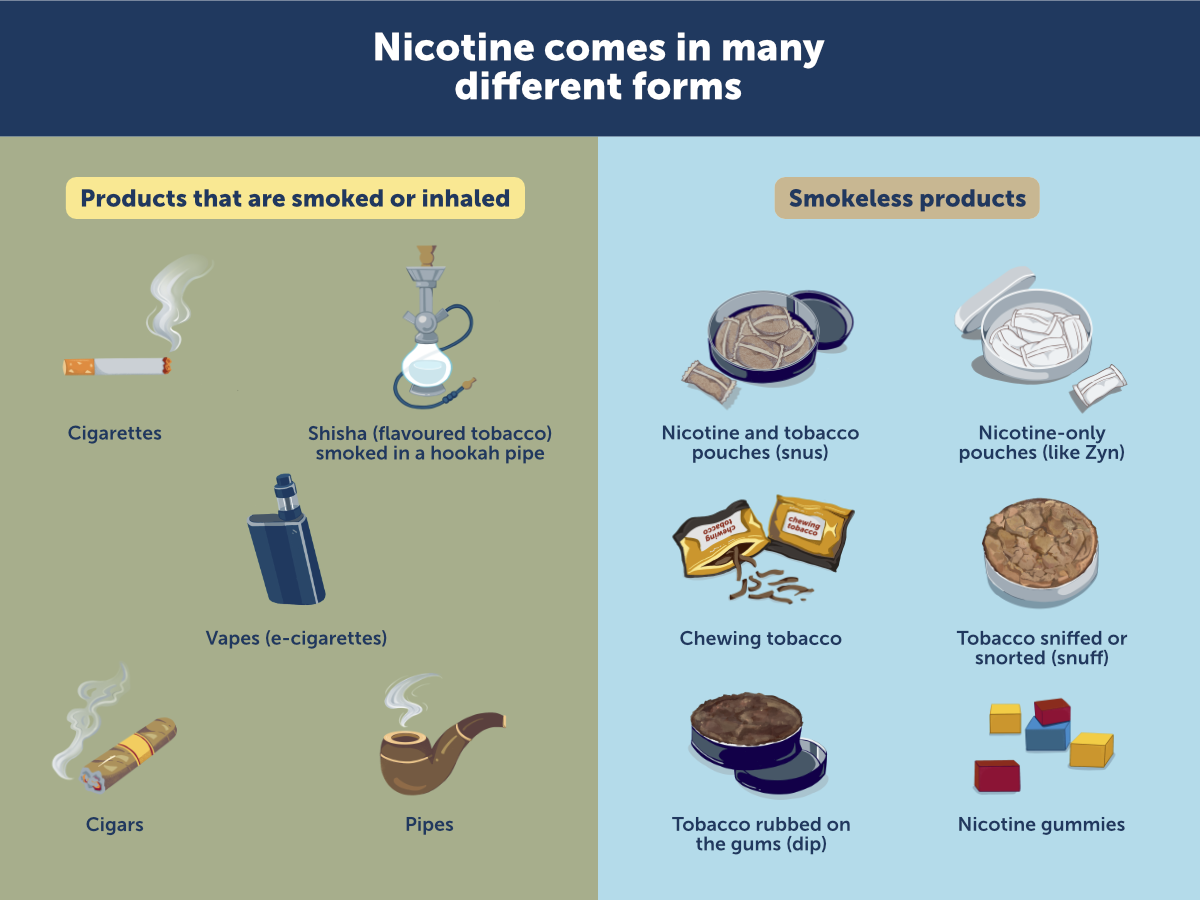
Figure one: Illustration of different types of nicotine products.
It’s illegal to buy all smokeless tobacco products in Australia – even if you are over 18 – unless you have a prescription. This includes snus and nicotine pouches.
Why is nicotine bad?
Nicotine is one of the most addictive substances in the world. In young people, nicotine can rewire the brain.
When you vape or smoke, the nicotine goes into your bloodstream and travels to the brain. Here, it releases a rush of chemicals that make you feel happy and more energetic. But these feelings quickly go away, and if you use nicotine regularly, your brain
starts craving more. Over time, your body gets used to having the drug, and it's harder to live without it.
Possible short-term effects of nicotine
- Fast heart rate
- Bad breath and dry mouth
- Headaches and dizziness
- Feeling sick (nausea) and vomiting
- Diarrhoea and needing to poo more
- Coughing (with products you smoke or inhale)
- Sweating
- Mood swings
- Less money to spend on food
- Nicotine poisoning (nic sick) from too much nicotine in the body. This is an emergency.
- Some symptoms of nicotine poisoning are sweating, nausea, vomiting, and seizures.
Possible long-term effects of nicotine
- Constant urge to have more nicotine
- Early aging and skin wrinkles
- Ongoing stomach issues like ulcers
- Heart attacks and other heart issues
- Problems with eyesight
- Changes to how things taste and smell
- Loss of muscle
- Problems with focus, memory, and learning
- Long-term mental health issues like depression and anxiety.
These are just the effects of nicotine itself. Each nicotine product has its own risks, too.
- Snus and nicotine pouches can cause mouth or nose pain, sores, and burning gums
- Vapes can damage the lungs and make it harder to breathe
- Cigarettes can cause lots of heart and lung issues, hugely increase the chance of getting many cancers and lead to other serious health problems.
Call an ambulance (000) immediately if you find it hard to breathe.
How do I know if I am addicted to nicotine?
The proper name for nicotine addiction is ‘nicotine dependence.’
Some signs you might be dependent on nicotine are if you:
- want nicotine when you wake up
- always think about your next nicotine fix
- start avoiding places and situations where you can’t use nicotine products, like family events
- have tried to stop using nicotine products but ended up starting again.
When you don’t have nicotine, you might:
- feel moody or irritated
- be anxious and jittery
- find it hard to pay attention
- not be able to sleep.
These are called nicotine withdrawal symptoms.
How to quit nicotine
There’s no right or wrong way to quit nicotine. Some people can stop one day and never touch it again; others cut down over time. The key is to stick with it and seek support from people around you. Every day without nicotine is good for your health.
Research shows people who quit nicotine before they turn 30 can reverse almost all the harms to their health.
It might help to start with a few basic steps:
- Throw out your nicotine products.
- Write a list of reasons why you want to quit nicotine.
- You should keep it on your phone, so you always have it nearby.
- Set a target ‘quit’ date.
- Think about your nicotine habits. Do you crave it more at certain times of day? Or in certain situations, like at parties or with the same friends?
- You might need to avoid these triggers for a while or find something else to do instead.
- Don’t be too hard on yourself. Quitting nicotine is really tough! If you start using nicotine again, this doesn’t mean you have failed and should give up trying to quit.
There are many places to seek support. In fact, you have a better chance of quitting for good if you get help along the way. Call Quitline on 137 848 to speak with an expert counsellor or download the free ‘My QuitBuddy’
app. You can also speak to your local doctor (general practitioner or ‘GP’) or a pharmacist for advice.
If you are finding it very hard to quit nicotine, you might want to chat with your GP or a Quitline counsellor about nicotine replacement therapy (NRT).
Products like patches and gum can help with nicotine cravings and withdrawal.
Advice for Aboriginal and Torres Strait Islander teens
If you are an Aboriginal or Torres Strait Islander teen and want to quit nicotine, there’s support out there. You don’t have to do it alone – there are services run by mob and Community that can help.
- Aboriginal Quitline: Help to quit smoking and vaping.
- Call 13 78 48 and ask for an Aboriginal counsellor. They will chat with you and give tips to help you quit. You can also fill out the form on their website to get a callback.
- If you are 16 or older, check out their Facebook pages for Aboriginal and Torres Strait Islander people who want to quit smoking or vaping.
- Tackling Indigenous Smoking (TIS): Your local TIS team can give you information and support. Reach out to them if you need help.
- WellMob: Visit WellMob for resources that can help you feel strong and stay on track.
- Community support – Victorian Aboriginal Health Service (VAHS): Get support by Community, for Community with VAHS through The Koori Way. You can also call them on 03 9419 3000.
What will happen when I quit nicotine?
If you plan to stop using nicotine products, it's good to know what you can expect.
Soon after quitting, you might:
- feel a strong urge to have nicotine
- be tempted to use nicotine products in certain situations, such as at parties with friends
- feel irritable, anxious, and jittery.
Within a few weeks, you should:
- be less tempted to have nicotine
- feel less irritable, anxious, and jittery
- notice health effects like breathing problems get better.
Things you might be wondering
Does nicotine make you high?
Nicotine doesn’t make you ‘high’ in the same way that drugs like weed (marijuana) do. It makes your body release lots of chemicals to give you a short-term buzz, but it doesn’t change your sense of reality.
How do I know if my vape has nicotine in it?
It’s impossible to know exactly how much nicotine is in a vape. This is because researchers have found even vapes labelled ‘nicotine-free’ usually have nicotine in them. Sometimes, this nicotine is artificial, meaning it’s made in a lab, but this
doesn’t make it safe.
How long does nicotine stay in your system?
The effects of nicotine can last anywhere between minutes and hours, depending on how much you have had and how often you had it. For example, someone who doesn’t usually smoke might feel the effects of nicotine for longer. The more nicotine you
have, the more your body wants.
Doctors can find traces of nicotine in urine and blood for days after you have last had it.
Does nicotine cause cancer?
Nicotine products like cigarettes and chewing tobacco are scientifically proven to increase the chance of many different cancers. No current research links nicotine directly to cancer, but many other ingredients in the products cause cancer.
For example, smoking cigarettes causes black tar to stick to your lungs; this increases the risk of lung cancer.
What are nicotine pouches?
Nicotine pouches are small bags that sit in your mouth between your lip and gum. They contain nicotine and sometimes other ingredients like sweeteners and flavourings. The nicotine inside the pouch gets absorbed through the mouth and into the
bloodstream.
How is Zyn different from snus?
Zyn is a popular brand of nicotine pouches. It’s a smokeless nicotine product like snus. But Zyn only has nicotine, whereas snus has both nicotine and tobacco. Snus is brown because of the tobacco, so it can stain your teeth.
Are vapes and nicotine pouches healthier than cigarettes?
All nicotine products are harmful. Scientists don’t know enough about the long-term risks of vaping yet because they haven’t been around long enough. The same applies to nicotine pouches – there aren’t enough studies about them. Older nicotine
products like chewing tobacco and snuff are just as bad as smoking.
It’s better to speak with your GP or a Quitline counsellor about short-term products like gum or patches than to switch to another illegal nicotine product.
Are light or low-tar cigarettes healthier?
There’s no safe way to smoke. Companies advertise cigarettes that are lighter, lower in tar, or filtered to make you think their products are healthier. The reality is that every cigarette is harming you – no matter the health claims it makes.
Is snus legal in Australia?
In Australia, it’s illegal to buy or sell snus and other smokeless tobacco products like nicotine pouches and chewing tobacco without a prescription.
I am worried my friend is addicted to nicotine. How can I help them?
If you think your friend is dependent on nicotine, talk to them about it in a gentle way. Try to be non-judgmental and listen to their concerns. You could offer to help them get support from a health worker or encourage them to call or message
Quitline.
Remember: quitting nicotine takes time. Your friend might try to stop a few times before it sticks. This is totally normal. Encourage them along the way and help them avoid situations where they crave nicotine. This might mean skipping some parties
and hanging out at home instead.
Helpful links
Developed by The Royal Children’s Hospital (RCH); medical review by the Respiratory department, with input from the Adolescent Medicine department. Created with advice from the RCH Health Literacy Youth Advisory Committee.
Reviewed January 2026
Speak with a doctor for up-to-date and personalised medical advice.