Fast facts
- The pelvic floor muscles are a group of muscles that form the entrance to the vagina, urethra and rectum.
- These muscles can tighten when they’re trying to protect you from pain.
- If this happens often, the muscles can stay tightened or ‘switched on’ out of habit, which can lead to other problems like trouble going to the toilet, problems inserting a tampon and painful sex.
- Pelvic floor exercises and belly breathing can help to support your pelvic floor muscles.
- If you’re having trouble with these things and it’s stopping you from living your life or causing you stress, it could be time to see a pelvic health physiotherapist.
What are the pelvic floor muscles?
The pelvic floor muscles, sometimes called the pelvic floor, are a group of muscles that sit at the bottom of your pelvis like a hammock. These muscles form the entrance to organs like the vagina, the urethra and the rectum.
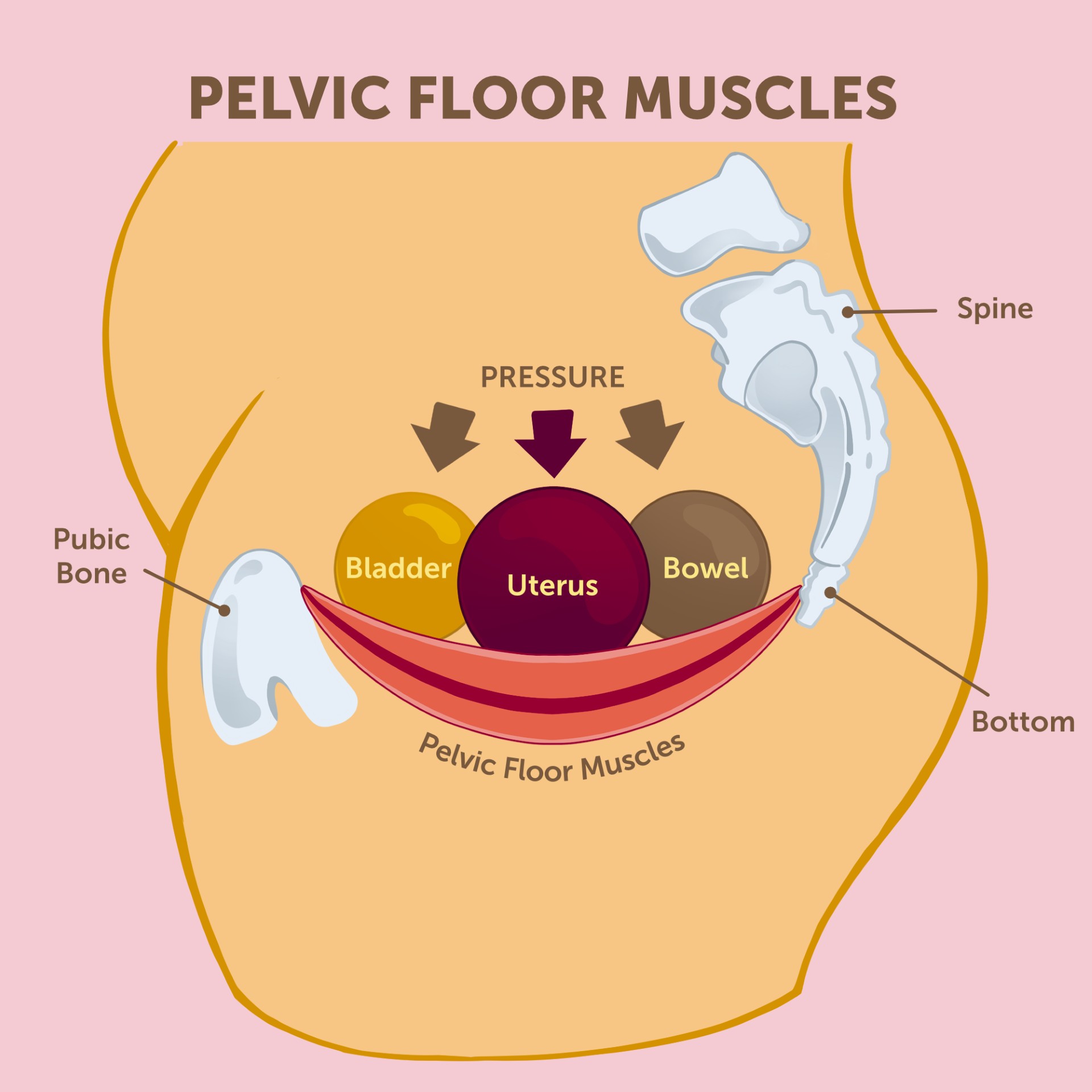
An illustration of the pelvic floor muscles.
The pelvic floor muscles are very protective. When you experience something uncomfortable or your body senses pain, the pelvic floor can automatically tighten to try and protect you. Unfortunately, this can mean that they start to ‘grip’ or hold on
all the time and become too tight, which in turn can make you feel more uncomfortable.
To help you imagine this concept, think about your hand. Naturally, your hand is quite relaxed and open but at times, it squeezes or grips and releases, as needed. This is like your pelvic floor.
When you squeeze your fingers or your hands shut and hold them tightly, you should begin to feel some discomfort after a while. Imagine you keep them held tightly for several minutes or even a few hours. Even after letting go, you might feel that
your hand is still sensitive and would continue to be sensitive if you kept doing this every day. Your pelvic floor muscles can be the same.
How does pelvic pain affect the pelvic floor muscles?
When your body experiences pelvic pain, it responds protectively by tightening the muscles around this area, including the pelvic floor.
This is a normal response. But, if the pain continues, the tightening of the pelvis can become a habit.
Over time, your pelvic floor muscles might stay constantly tightened or ‘switched on,’ even when they should relax (just like your hand).
If pelvic pain is affecting your pelvic floor muscles, you might also:
- Have trouble going to the toilet, including holding on to wee and poo
- Need to go to the toilet more often
- Have trouble relaxing when you sit on the toilet
- Have problems inserting a tampon
- Feel pain with sex.
How to help support your pelvic floor muscles
Pelvic floor exercises
For pain, it's generally best to focus on belly breathing and exercises that help to release the pelvic floor muscles, rather than strengthening them. This is sometimes called 'down training.'
When you experience a lot of pelvic pain, your pelvic floor muscles aren’t weak, as you might think. Rather, they’re tired from being activated and alert all day. These exercises aim to down train the pelvic floor to help it relax.
Belly breathing
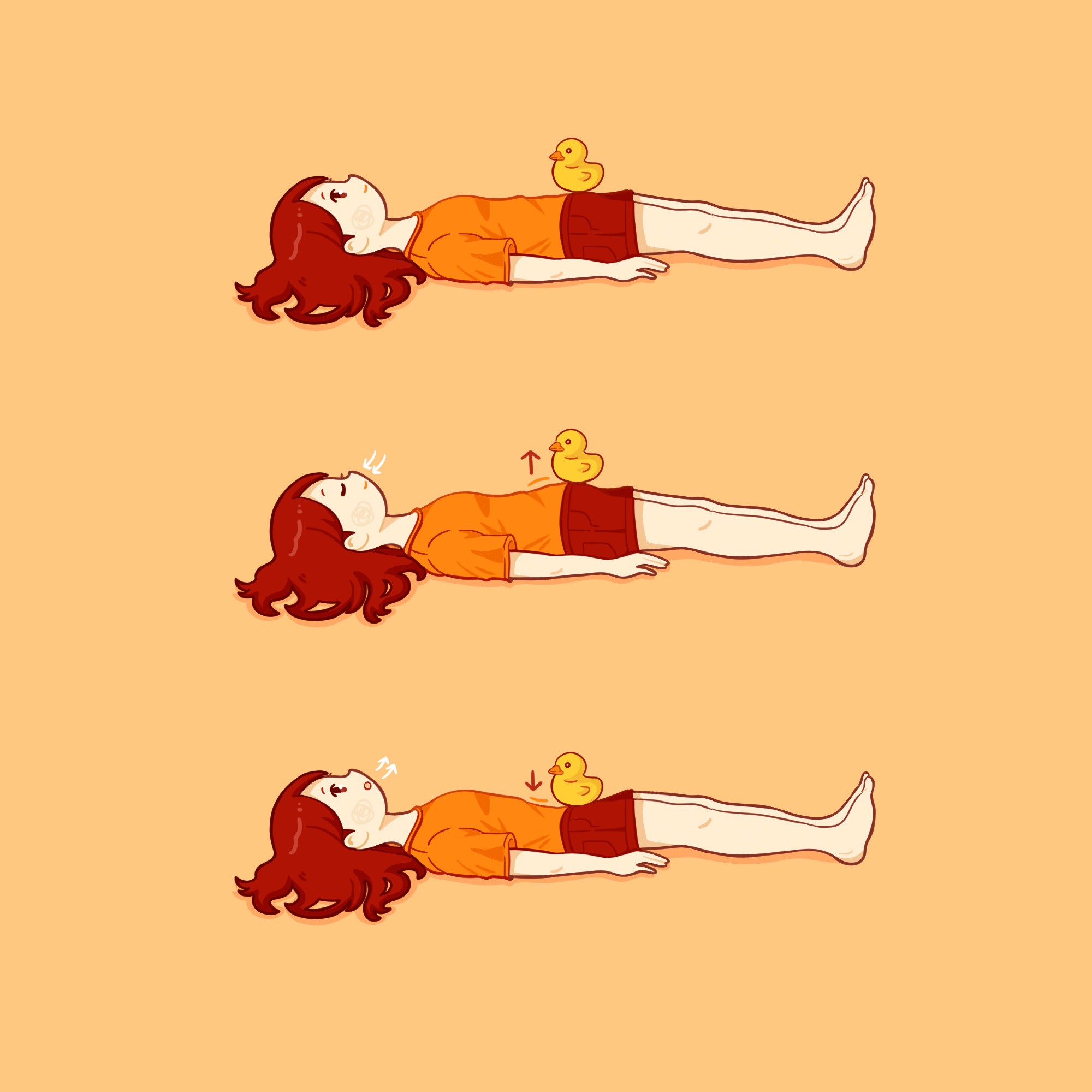
An illustration of belly breathing
Belly breathing is one way to help restore coordination between your diaphragm – the muscle between your lungs and stomach – and your pelvic floor muscles. It can balance the pressure in this area, improve circulation and calm your nervous system.
You can try belly breathing when you’re having a pain flare-up or every day as part of your usual routine.
When you inhale
- Your diaphragm moves down, pulling air into the lungs
- Your pelvic floor muscles gently lengthen and relax
- Your belly expands in all directions (like a balloon filled with air).
When you exhale
- Your diaphragm moves up, squeezing the air out of your lungs
- Your pelvic floor contracts and gently lifts
- Your abdomen returns to its usual resting position.
Try lying on your back or sitting with your feet flat on the floor:
- Place one hand on your upper chest and the other on your belly.
- The hand on your chest should remain fairly still throughout this exercise.
- Imagine your belly is like a balloon.
- As you breathe in, imagine the balloon filling with air and expanding.
- As you exhale, allow the balloon to deflate and your belly to relax gently back down.
Practice your belly breathing each night before sleep. That way, you will be able to use this breathing technique when you are experiencing pain. You can also practice this breathing each time you’re doing a wee or a poo.
When to get help
- If you are having trouble going to the toilet or can’t control your bladder or bowels
- If putting a tampon in is painful
- If you have pain with sex.
Support options
You can start by talking to your local doctor (GP) about getting a Chronic Disease Management (CDM) plan; this may help you access a physiotherapist at a reduced cost.
Pelvic health physiotherapy
A pelvic health physiotherapist is a qualified health professional who specialises in managing pelvic pain conditions; they might be part of your pain support team. They can help design a treatment plan to reduce the intensity of your pain, anxiety
and pain-related worries, including fear of movement, to help you get back to doing the things you enjoy.
A pelvic health physiotherapist can help with:
- Understanding your pelvic pain through assessment and education
- Exercises for the pelvic floor and whole body
- Belly breathing
- Going to the bathroom
- Pain management through electrotherapy like a TENS machine.
Pelvic health physiotherapists should have additional, specialist training and be registered with the Australian Health Practitioner Regulation Agency (AHPRA). Some pelvic health
physiotherapists specialise in helping children and young people with their pain, so it’s worth asking.