Your pain is real; it’s your body trying to protect you. By calming your nervous system, you can help reduce pain and feel more in control.
Fast facts
- The nervous system is how your brain speaks to different parts of your body.
- When you experience pelvic pain, your nervous system tells your body how to respond and can start to protect you from more pain.
- Calming strategies and grounding exercises can help support your nervous system and reduce your pain.
- Other things like your sleep and what you eat and drink can also impact your nervous system.
- If you’ve tried some of these exercises and your pain is still stopping you from doing the things you enjoy, it might be time to chat to your local doctor (GP).
What is the nervous system?
Pelvic pain isn’t just physical. It also involves your brain and nervous system.
Your nervous system is how the brain speaks to other parts of the body. Nerve cells throughout your brain, spinal cord and body send and receive messages that affect how your body responds.
For example, if you kick your toe, it’s your brain that tells you it hurts by sending messages through the nervous system.
A very important part of the nervous system is the vagus nerve – a massive nerve that connects your brain stem to most of your internal organs.
The nervous system can tell your body to start protecting you when you’re in pain.
How does pelvic pain affect my nervous system?
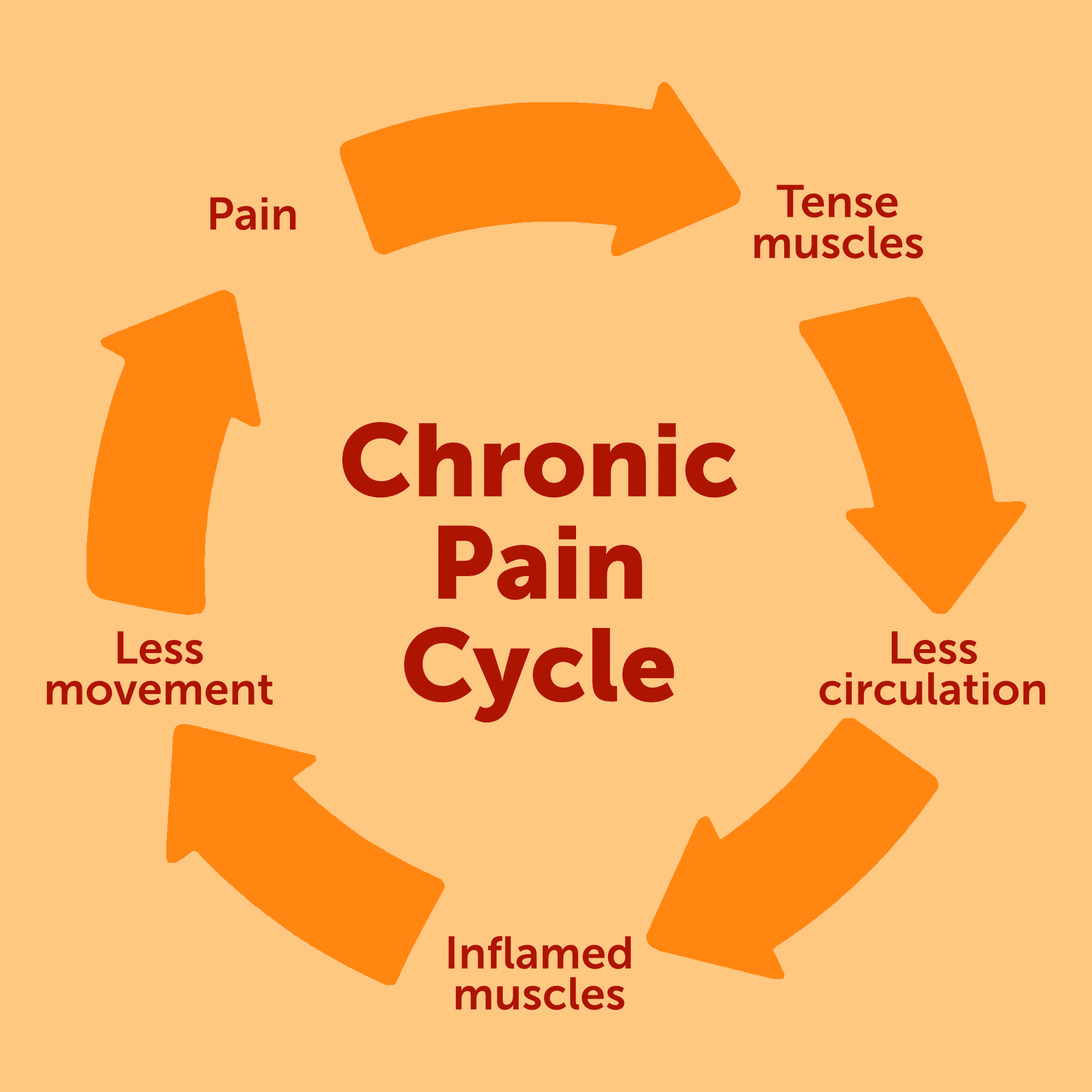
An illustration of the chronic pain cycle.
When you experience pelvic pain, your brain receives messages through the nervous system that tell your body something is wrong. These messages prompt the body to go into protection mode.
The longer pain lasts, the more sensitive these protective systems can become. This means your body may react more strongly to pain, as time goes on.
When your nervous system becomes more protective:
- You might feel tight or tense (especially in your stomach, hips or pelvic area)
- Your body releases stress hormones
- You might have thoughts like, ‘This will never get better’
- You might feel anxious, sad or frustrated
- You might avoid activities because you’re worried about pain.
The good news is you can learn ways to help calm your nervous system to reduce pelvic pain.
Strategies to support or calm your nervous system
Progressive muscle relaxation
Progressive muscle relaxation is when you gently tense and relax different muscles in your body, one at a time.
This can help you to:
- Release hidden tension
- Notice early warning signs of pain
- Build awareness of your body.
Calming music and meditation
Try listening to slow, calming music or a guided meditation via an app or YouTube.
This can help you to:
- Shift focus away from pain
- Relax your body
- Reduce stress and tension.
Grounding exercises
Grounding exercises aim to focus your attention on the present moment.
These can help you to:
- Calm your nervous system
- Make pain feel less intense
- Lower stress
- Reset how you’re feeling.
The 5–5–5 exercise
- Think about five things you can see.
- Think about five things you can hear.
- Think about five things you can feel.
Go slowly, noticing as many details as you can.
Breathing awareness exercise
- Breathe in slowly.
- Breathe out and name something you see or hear.
- Repeat a few times.
Butterfly hug
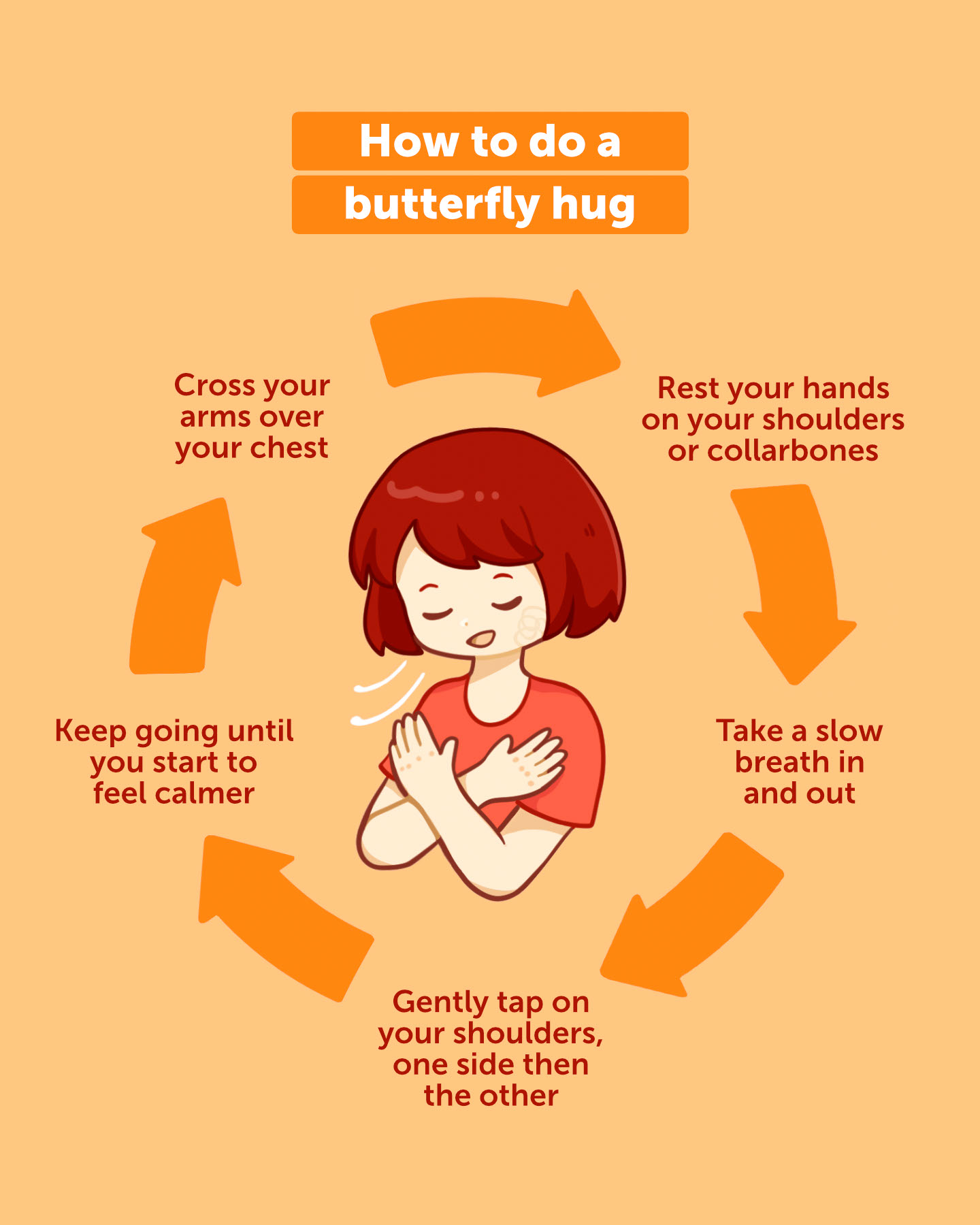
An illustration of a butterfly hug.
- Cross your arms over your chest.
- Place your hands on your shoulders or collarbone.
- Gently tap on your left and right shoulders or arms, one at a time.
- Breathe slowly as you tap.
Many people find this exercise calming because it combines gentle movement with slow breathing and helps them focus on the present moment.
Think about your lifestyle
Pay attention to what triggers your pain and what helps to ease it.
It might help to keep notes in a symptom diary so you can keep track over time. You can write them down on paper, in your phone or on a calendar.
Sometimes, small changes to your lifestyle can make a big difference. For example:
- Going to bed earlier if you feel tired
- Avoid going on your phone before bed, as the screen can wake your brain up when you’re trying to wind down
- Cutting caffeine if it makes your pain worse
- Give yourself time to rest after busy days
- Spacing out activities might help you avoid flare-ups.
Everyone is different. Find what works for you.
When to get help
- If your pain is stopping you from doing things you enjoy.
- If calming strategies and grounding exercises don’t help with your pain.
Support options
- Speak to family members, your friends, community leaders or another trusted adult.
- Speak to your school nurse, wellbeing officer or school counsellor.
- Kids Helpline – a free and confidential phone support service, available 24/7.
- Headspace – offers support through their clinics, or over the phone and online.
- If you want more support, speak with your local doctor (GP) who can help with a Mental Health Treatment Plan or referral to a psychologist.
Mental health support and meditations
Mental health support for neurodivergence
Updated July 2026