Movement is an important part of managing pelvic pain. Gentle, regular movement can help reduce pain and make daily activities feel easier over time.
Fast facts
- Gentle, regular movement can help reduce pelvic pain over time.
- Movement can make daily activities feel easier.
- Exercise can help stiff and painful areas feel less tight.
- Movement can support mood, energy, and recovery.
- The best kind of movement is whatever feels safe for your child or young person.
- If they feel unsure about exercising, a physiotherapist or exercise physiologist can help.
- If pain is flaring, finding a comfortable position can help them relax.
- There is lots of help and support available through your doctor (GP) and other health professionals.
Movement can be really helpful for young people experiencing pelvic pain. Another way to put it is ‘motion is lotion.’ Exercise increases blood circulation throughout the body. This can help stiff or painful areas and make muscles feel less tense.
Movement also releases several hormones and chemical messengers that affect mood, energy, recovery and health. These include:
- Endorphins, which are the body’s natural painkillers.
- Dopamine, which helps with motivation, reward and enjoyment.
- Serotonin, which regulates moods, sleep and feelings of happiness.
What type of movement helps pelvic pain?
The best type of exercise or movement is whatever feels safe. Your young person may become more confident the more they move. If they can’t find an exercise that feels safe, it’s a good idea to get help from a physiotherapist or exercise physiologist.
Some types of movement you might like to encourage your young person to try include:
Walking
- Gentle and low-impact.
- Supports mood, stress and physical fitness.
- Can be a great way to see friends and family, or simply get around.
Stretching
- Encourages safe movement.
- Reduces fear of movement.
- Improves body awareness.
- Reduces muscle tightness around hips, pelvis and lower back.
- May decrease pain caused by muscle tension.
Yoga
- Combines gentle movement with relaxation.
- Helps to regulate the nervous system.
- Builds a sense of safety in the body.
Jogging
- Reminds them that their body is strong.
- Supports positive mood and wellbeing.
Pilates
- Improves their confidence in movement.
- Encourages varied, non-protective movement.
- Improves posture and movement patterns.
- May help reduce strain on the pelvis and lower back.
Support them in being kind to themselves
There will be times when your young person might not be able to move as much as they want because of their energy levels or motivation. This can be upsetting and cause them even more stress. If they are frustrated or upset about not being able to
move, it might be helpful to speak to a health professional. If you find that your young person is moving less and less over time, this would also be a good time to seek support.
Comfortable positions when they’re in pain
When your young person is experiencing a pain flare-up, getting into a relaxing or comfortable position can help them feel better. Muscles often tighten when they’re trying to protect the body, but tight muscles can actually make the pain worse.
Encourage them to try the following positions and see what works. These positions allow the muscles that affect their posture, their tummy and their pelvic muscles to rest and relax.
On their side
Get them to lie on their side. Place one pillow under their head and another pillow between their knees and ankles to help to keep their hips aligned. Get them to bend their knees and hips to where they feel comfortable. They could also place
a rolled towel under their lower back. Focus on slow, relaxed belly breaths.
Using a chair
Get them to lie on their back with a pillow supporting their head. Rest their lower legs up on a chair with their feet and knees shoulder-width apart. Encourage them to relax their shoulders and focus on slow belly breaths.
Knees supported
Get them to lie flat on their back either on the floor or on their bed. Encourage them to bend their knees up and rest their feet flat on the floor. Place a pillow underneath their knees. Encourage them to relax their shoulders and focus on relaxed
belly breaths.
Stretches to help reduce their pain
Stretching can help to loosen the muscles around the pelvis and back. These can become tight as a result of their pelvic pain. They might also have a sore back, or even sore legs.
Stretches can help your young person if they’re in pain or as part of their daily routine. These stretches are meant to be relaxing and to give a gentle stretching sensation rather than causing more pain. If doing these stretches hurts them more, they should stop immediately.
The aim is to do movement that feels safe to their body. It’s why gentle, slow stretching is a really good place to start. It’s not about how they look when they’re stretching, but how it feels in their body.
| Stretch |
How to do it |
|
.jpg "Child's pose demonstration")
Child’s pose
|
Start on their hands and knees. Bring their bottom back so it rests on their heels. Their knees should be wide apart, and their big toes should touch. They should keep their back long and straight. Their arms can be stretched out in front
or resting by their sides. They can use pillows, cushions or towels to help support themselves. They should aim to hold this position for 20–30 seconds and repeat it three times. |
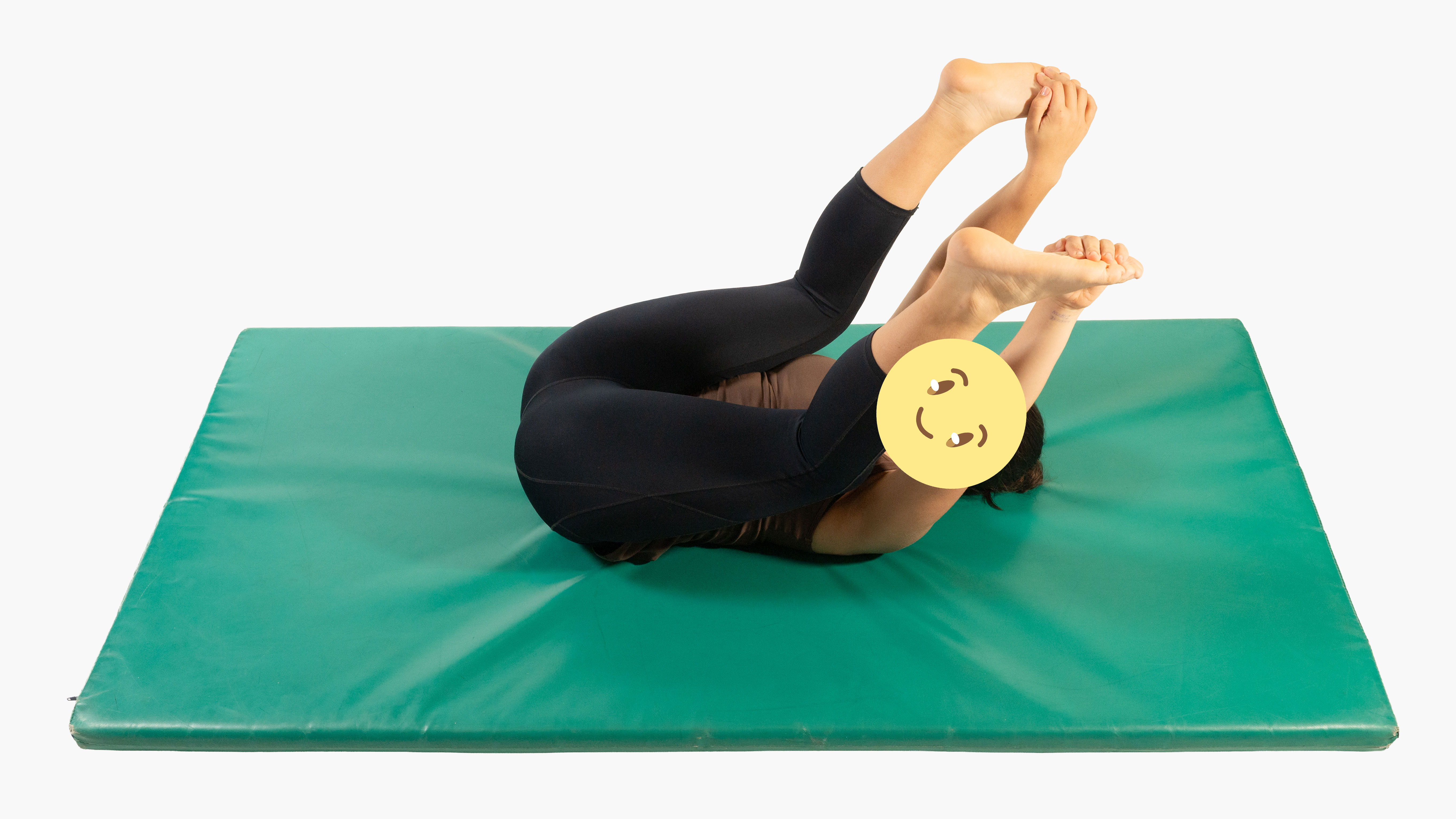
Happy baby
|
Encourage your young person to lie flat on their back. Then, bend their knees and hold on to them. Get them to bring their knees towards their armpits and open their hips so that their knees are now wider than their body. Get them to reach
up and take hold of the insides of their feet or hold the back of their thighs or their lower legs. Remember to encourage them to relax their head and neck. They could also rock side to side if it feels good for them. Hold this for
20–30 seconds (or longer if they like). They could repeat this three times. |
|
.jpg "An example of butterfly legs")
Butterfly legs
|
Get them to lie on their back with their knees bent. This allows their hips to open when their feet are together. Use a pillow under their head and rolled up towels or pillows under their knees and thighs so they are supported and comfortable.
Encourage them to hold this pose for two to three minutes or longer if they like. |
|
(1).jpg "Froggy squat stand example")
.jpg "A froggie squat")
Froggie squat
|
They start by standing with their feet slightly wider than their hips. Gently get them to squat with their toes pointed out slightly. Use a low stool or support under their bottom if needed. Encourage them to hold this position for 20–30
seconds and repeat it three times. |
|
.jpg "Pigeon stretch example")
Pigeon stretch
|
Start on their hands and knees. Draw the right knee forward and place it just behind the right wrist. Encourage them to try to bring their right ankle a bit closer to their left wrist. Then straighten their left leg out behind them. Get
them to slowly lower their body to the ground, keeping their hands on the floor. They can then sit up as tall as they can. Be sure to remind them to keep their hips facing forward. Get them to hold this for 20 seconds on the upward
stretch and then 20 seconds leaning forward. Do this on each side and repeat twice on each side. |
|
.jpg "Cat stretch")
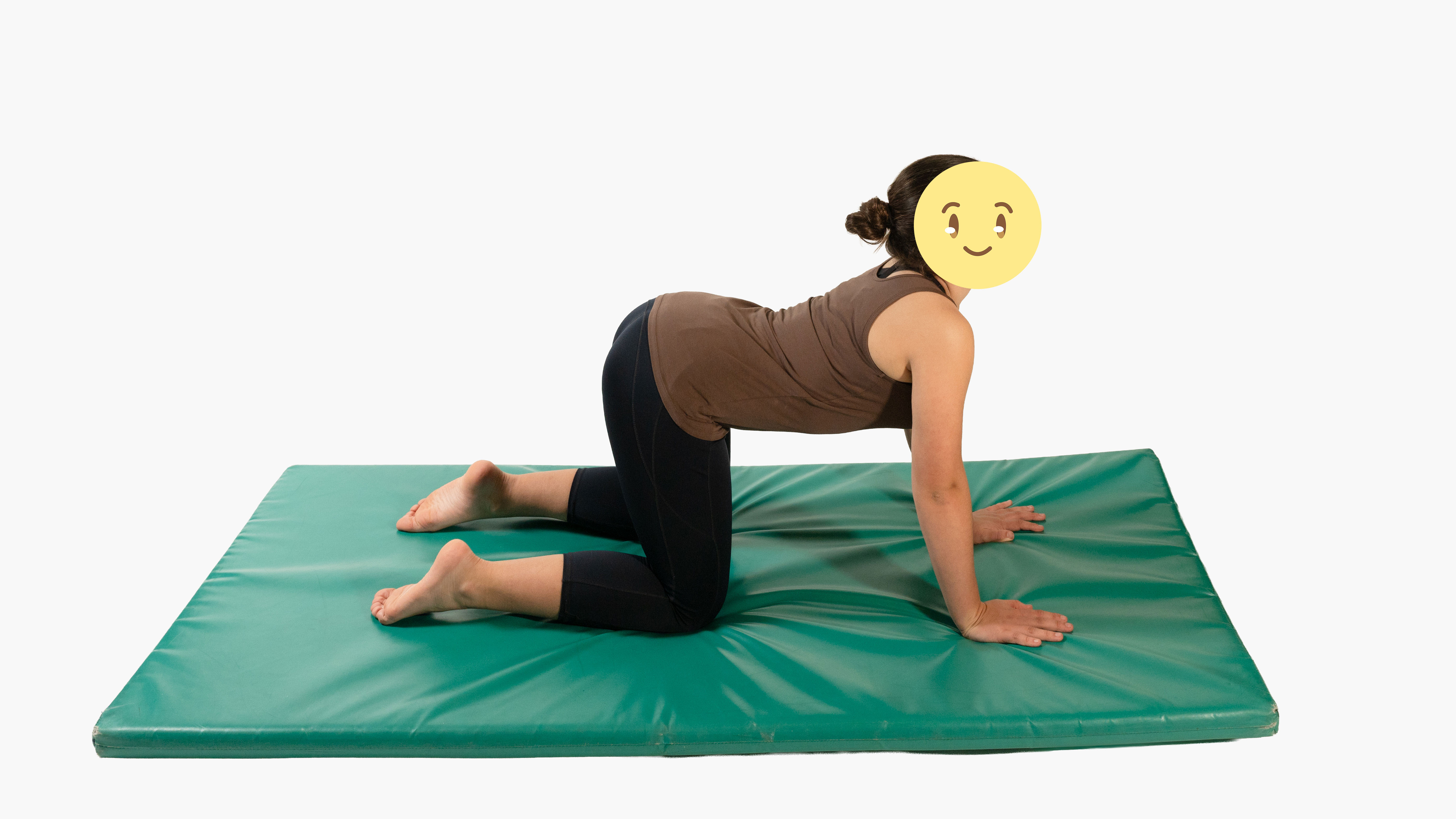
Cat and cow
|
Start on their hands and knees. Get them to arch their back like an angry cat and tuck their bottom under. Hold for two to three seconds. Get them to lift their head up and dip their back like they’re a camel. Hold for two to three seconds.
Repeat this 10 times. |
When to get help
- If your young person doesn’t feel confident or comfortable about exercising because of their pelvic pain, you can talk with a pelvic health physiotherapist.
- You can also talk to your doctor (GP) about getting a Chronic Disease Management (CDM) plan which may help with accessing a physiotherapist at a reduced cost.
Support options
Pelvic health physiotherapy
A pelvic health physiotherapist is a qualified health professional who specialises in managing pelvic pain conditions. They might be part of the pain support team for your young person. They can help design a treatment plan to reduce the intensity
of your child’s pain, anxiety, and pain-related worries. They can also help them overcome fear of movement and help them get back to doing the things they enjoy.
A pelvic health physiotherapist can help with:
- Understanding pelvic pain through assessment and education
- Exercises for the pelvic floor and whole body
- Belly breathing
- Going to the bathroom
- Pain management through electrotherapy like a TENS machine.
Pelvic health physiotherapists should have additional, specialist training and be registered with AHPRA (Australian Health Practitioner Regulation Agency). There are some pelvic
health physiotherapists who specialise in helping young people with their pain.
Pelvic pain movement resources