See also
Emergency airway management
Acute upper airway obstruction
Resuscitation: Hospital management of cardiopulmonary arrest
Foreign body ingestion
Key points
- Inhalation of a foreign body (FB) into the trachea or larynx is a potentially life-threatening event requiring immediate emergency airway management
- FB inhalation is frequently unwitnessed, a high degree of suspicion is required in young children with respiratory symptoms
- Seek a history of inhalation or choking which may have occurred days or weeks before presentation with symptoms
- Normal respiratory examination or chest x-ray (CXR) does not exclude an inhaled FB
- Low dose CT chest may provide high diagnostic accuracy for select children with suspected FB aspiration when clinical suspicion is uncertain or plain x-ray is inconclusive, but should not delay bronchoscopy when clinical suspicion is high
Background
- The signs and symptoms of FB inhalation will vary depending upon the site of impaction, degree of blockage and type of object
- The majority of FB inhalation events occur in children <5 years and are commonly due to nuts, raw carrot or apple, seeds, popcorn, coins, balloons and pieces of toys. Older children with developmental impairment may continue to be at risk
- Button batteries are more commonly ingested than inhaled, but recognition and management is critical
- Most inhaled FB are located in the bronchi rather than the larynx or trachea
- Children may be asymptomatic initially, with symptoms presenting days to weeks after FB inhalation including persistent focal wheeze, recurrent pneumonia in the same lobe or unexplained chronic respiratory symptoms
Assessment
History
- Detailed description of timing, nature of event and possible FB inhaled, if witnessed
- The site of impaction may be suggested by the clinical presentation
Clinical features based on impaction location
|
Impaction in larynx or trachea
- Sudden and catastrophic event
- Coughing, choking ± vomiting
- Severe respiratory distress
- Stridor
- Cyanosis
- Altered mental state
- Drooling and voice changes
- Total obstruction will rapidly progress to unconsciousness and cardiorespiratory arrest
- Consider FB inhalation in a child in cardiorespiratory arrest who is difficult or impossible to ventilate
|
|
Impaction in main bronchus
- Witnessed episode of choking, coughing or wheezing while eating or playing (many are unwitnessed)
- Tachypnoea and respiratory distress
- Cyanosis
- Persistent wheeze (may be focal and partially respond to bronchodilators)
- Persistent cough
- Fever
- Haemoptysis
- Shortness of breath
- Recurrent or persistent consolidation
- May be asymptomatic after initial event before developing complications such as pneumonia
|
|
Impaction lower than main bronchus
- Often asymptomatic after initial event, may have delayed presentation with persistent cough and/or focal wheeze, recurrent pneumonia in the same lobe or unexplained chronic respiratory symptoms
- May have symptoms as for main bronchus FB
|
Examination
- May be normal
- Observe and maintain child’s preferred position (eg sniffing or tripod) and minimise distress
- Work of breathing
- Stridor
- Drooling and altered voice quality
- Asymmetrical chest movement
- Tracheal deviation
- Focal wheeze or decreased breath sounds
- Check for other FB in ears, nose and throat (once child is stable)
Assessment of likelihood of FB inhaled
|
Low suspicion
(requires all features below)
|
Intermediate suspicion
(any features below)
|
High suspicion
(any features below)
|
|
No witnessed choking episode
|
History suggestive of aspiration with/without witnessed choking episode
|
Witnessed choking episode
|
|
Gradual onset of symptoms
|
Unclear or sudden onset of symptoms
|
Sudden onset of symptoms, particularly during eating or play
|
|
Intermittent cough
|
Persistent cough, wheeze or increased work of breathing
|
Persistent cough following choking episode, wheeze, increased work of breathing, stridor or recurrent pneumonia
|
|
Normal examination
|
Persistent wheeze
|
Focal wheeze, asymmetrical breath sounds, asymmetrical chest movements and/or stridor
|
|
Normal CXR
|
Normal or equivocal CXR
|
CXR consistent with FB
|
Management
If required, provide emergency resuscitation prior to other management. Ongoing close observation is required in all children until FB removed, as any movement of FB may cause sudden airway compromise
Investigations
- Consider CXR with inspiratory/expiratory films (if child can cooperate) or lateral decubitus views (useful in younger children)
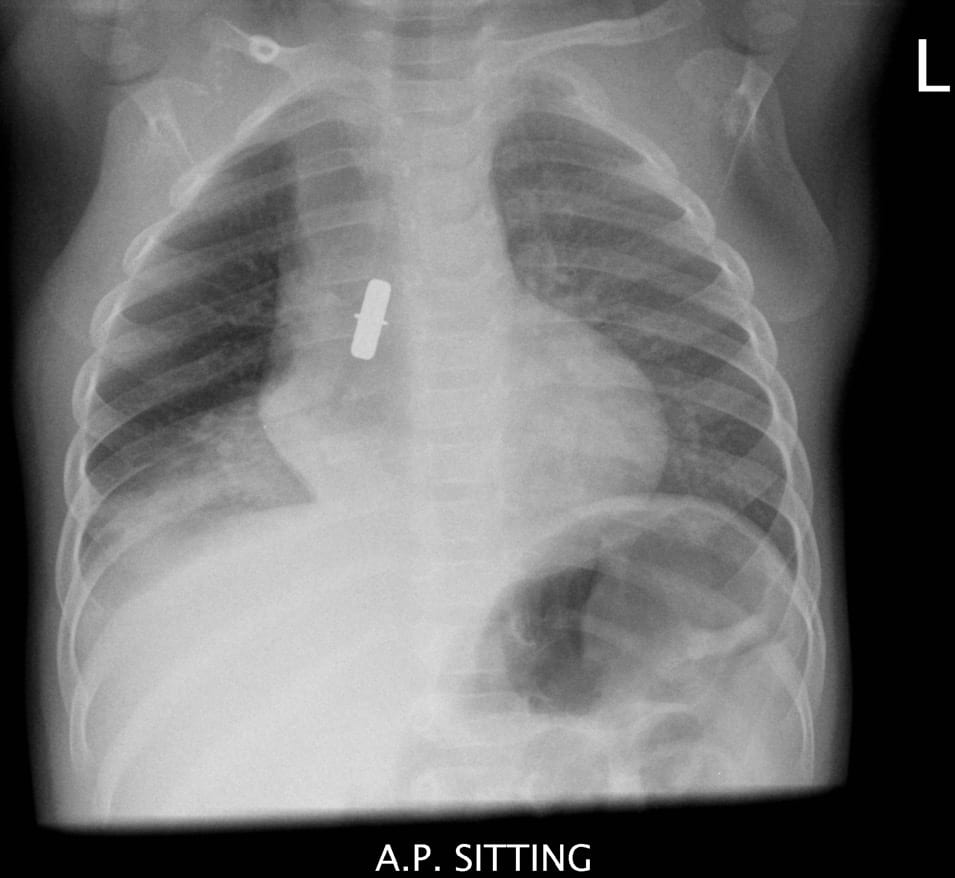 |
Radio-opaque FB Segmental or lobar collapse |
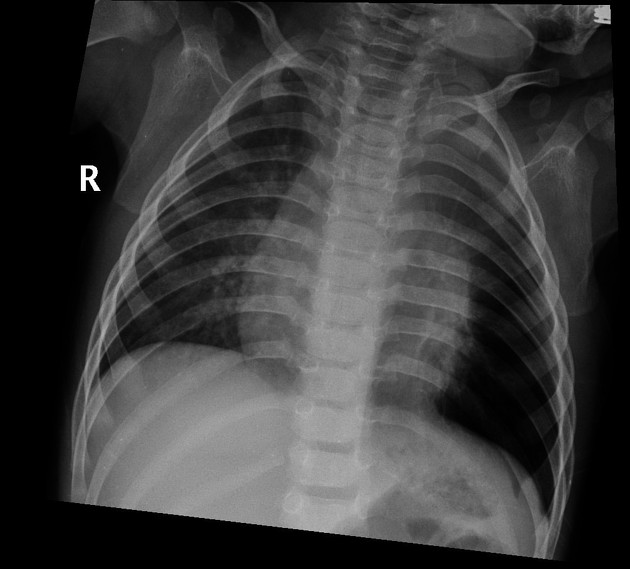 |
Asymmetry in lung inflation caused by a ball-valve obstruction and air trapping |
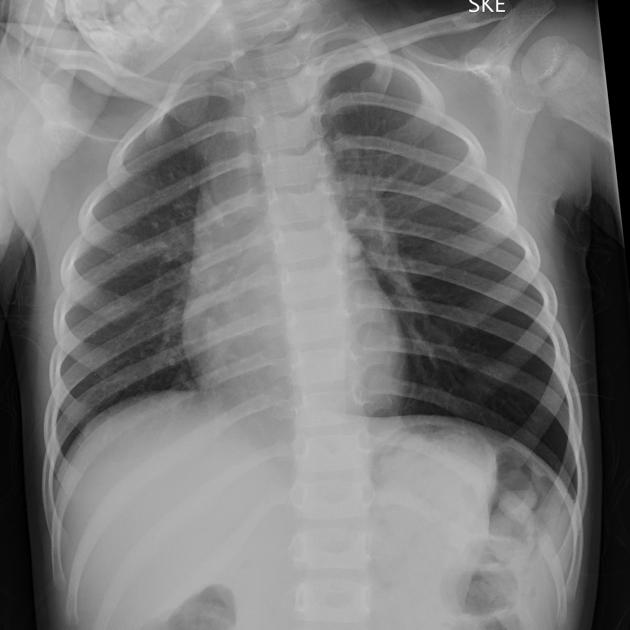 |
On inspiratory/expiratory films, one lung will fail to deflate on expiration Flattening of hemidiaphragm Mediastinal shift |
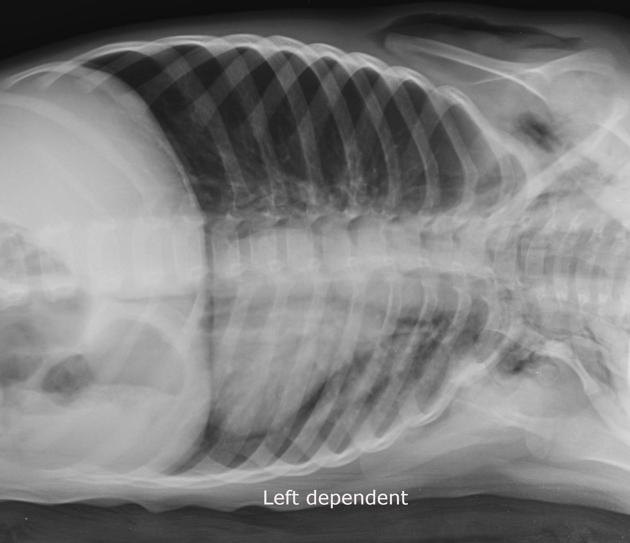 |
On lateral decubitus views, dependent lung fails to collapse and remains lucent and expanded |
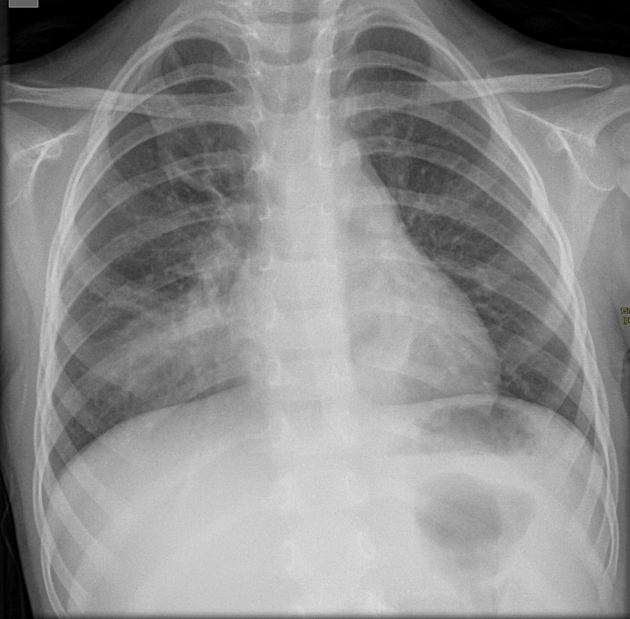 |
Consolidation suggesting pneumonia |
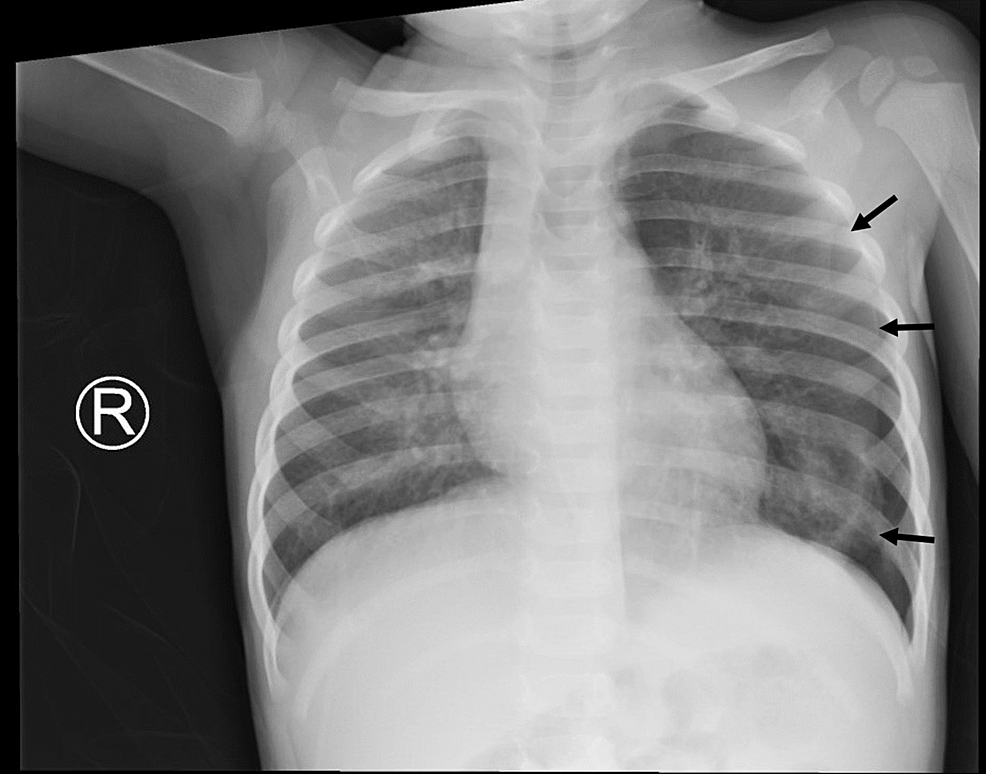 |
Pneumothorax |
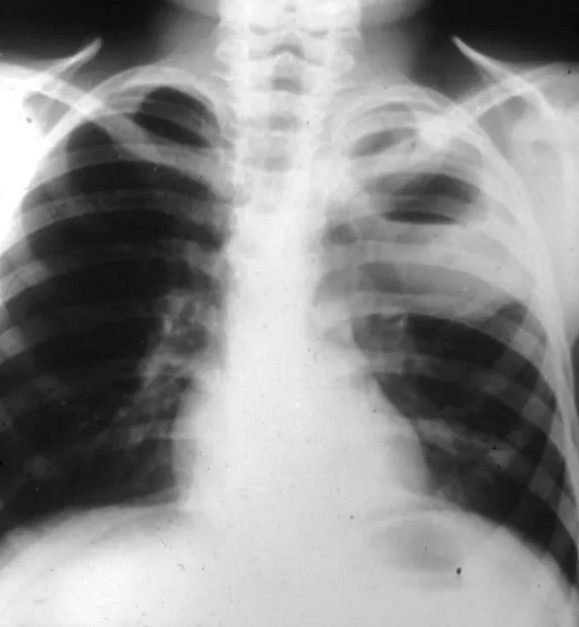 |
Pulmonary abscess or bronchiectasis, which may indicate a chronic impacted FB |
- A normal CXR does NOT exclude an inhaled FB. Most aspirated objects in children are radiolucent (eg nuts, seeds, plastic)
- Modern low dose CT chest has very high sensitivity and specificity (91-100% sensitivity, 93-100% specificity) and radiation exposure is similar to a CXR. However, CT must not delay bronchoscopy when clinical suspicion is high
- Consultation with a senior clinician is essential prior to sedation, as suspected FB aspiration is associated with risk of acute airway obstruction
- CT is recommended after consultation with ENT/Respiratory when
- CXR is normal or inconclusive, but suspicion remains high
- child can safely undergo scanning
- goal is to avoid unnecessary bronchoscopy in borderline or unclear cases
- suspected FB is radiolucent and not visible on x-ray
- symptoms are chronic or atypical, and diagnosis is uncertain
- CT should be avoided when
- child is showing signs of airway compromise; seek urgent ENT and/or anaesthetics review
- there is clear clinical evidence requiring urgent bronchoscopy
- imaging would delay definitive intervention
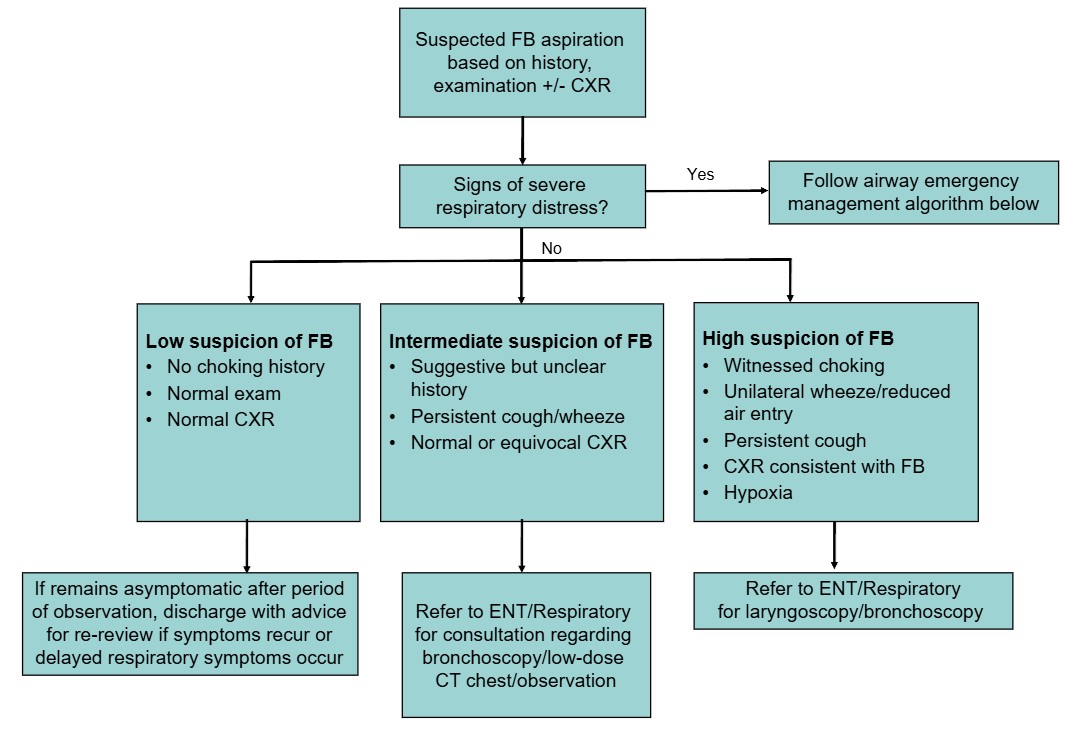
Diagnostic algorithm for suspected FB inhalation

Treatment
Airway emergency management
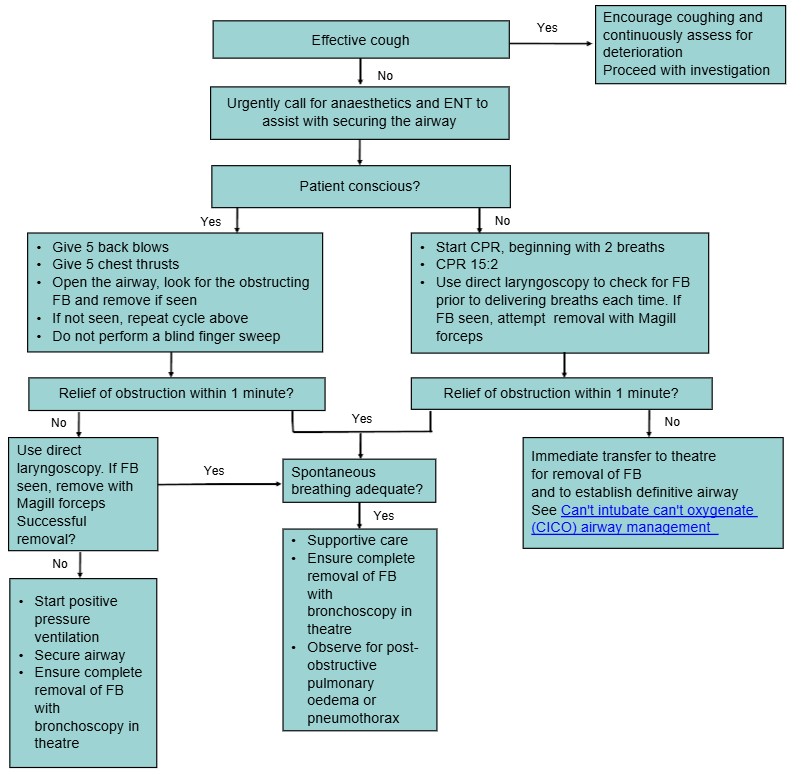

- Back blows: check to see if each back blow has relieved the airway obstruction. The aim is to relieve the obstruction with each blow rather than to give all 5 blows.
- Chest thrusts: these are similar to chest compressions but sharper and delivered at a slower rate. In an infant, the thumb-encircling technique or even the heel of one hand may provide more effective force
- Attempts at removal of a FB +/- advanced airway management using laryngoscopy, Magill forceps, cricothyroidotomy and other procedures should ideally be performed by the most senior clinician experienced in advanced airway management. However, it may be reasonable for a less experienced clinician to proceed if a child is deteriorating
- If it is not felt to be safe to attempt these procedures, basic resuscitation should be continued while awaiting senior assistance
Subacute management
- In children who have a stable airway where there is intermediate or high suspicion of an inhaled FB after history and assessment, refer to ENT/Respiratory consideration laryngoscopy/bronchoscopy
Consider consultation with local paediatric team when
A secondary consultation may assist before speciality review
Consider consultation with ENT or respiratory team when
Intermediate or high suspicion for inhaled FB
Consider transfer when
Local services unable to perform procedures or investigations
For emergency advice and paediatric or neonatal ICU transfers, see Retrieval Services
Consider discharge when
FB removed and/or child stable after period of observation
Parent information
Prevention strategies
- Young children should not be offered hard round foods such as popcorn, hard lollies, uncut grapes, peanuts or other nuts, raw carrot or apples
- Encourage children to sit calmly while eating, and offer food one piece at a time
- Avoid toys with small parts for children <3 years
Choking, suffocation and strangulation prevention handout
Last updated September 2026