Key points
- ‘Bedwetting’ is urinating (peeing) while asleep without meaning to.
- It is very common in children and is not usually caused by complex medical conditions.
- Most children do not have any long-term health problems from bedwetting.
- It is common for children between the ages of four and six years to wet the bed on and off when they first start toilet training; most children do not need any medical treatment for this.
- If your child wets the bed, it is important to support them rather than criticise or shame them.
- Many children will stop wetting the bed over time on their own, as their brain and bladder mature.
- Bedwetting alarms are an effective way to treat bedwetting. Medicine may be an option for some children if alarms do not help.
What is bedwetting?
Bedwetting is urinating (peeing) while asleep without meaning to. The medical name for it is ‘nocturnal enuresis.’ While it can be frustrating, bedwetting is a common problem for many children – especially between the ages of four and six.
Most children will stop wetting the bed on their own over time; by age eleven, a smaller percentage of children still wet the bed.
Children do not usually have any long-term health problems from bedwetting; however, many will feel embarrassed or ashamed. It is important to support your child and reassure them that they are not the only one who wets the bed.
What causes bedwetting?
There are many reasons why children may wet the bed. It is not usually because of anything you or your child is doing wrong.
Some of the most common causes are:
- Sleeping too deeply to wake up in time for the toilet
- Making more urine (pee) while asleep
- Overactive bladder wall muscles
- Genetics – if a parent wet the bed growing up, your child is more likely to wet the bed
- Smaller bladder
- Constipation
- It is common for children to have constipation without showing any signs or symptoms. This condition could be causing their bedwetting.
- If your child is constipated, treating the constipation may help to stop the bedwetting.
In rare cases, other medical problems may cause bedwetting, such as obstructive sleep apnoea (OSA) or a urinary tract infection (UTI).
Children will usually have other signs and symptoms related to these conditions.
Signs and symptoms of bedwetting
If your child wets the bed while asleep, they may:
- Wake up with wet pyjamas or bed sheets
- Wet the bed only sometimes or every night
- Stop wetting the bed for a while, then start doing it again.
Wetting a night nappy or pull-up while asleep also counts as ‘bedwetting,’ as it is the same bodily process – just with a physical barrier between the child and the bed.
Bedwetting does not tend to cause other signs or symptoms, unless it is linked to another condition.
How to care for bedwetting at home
It is very important to support your child if they wet the bed. Punishing or criticising them can make them more stressed, and may increase the chance that they wet the bed again. Make sure to explain this to your child’s siblings if you have other children.
- Be patient and use encouraging words when speaking to your child about their bedwetting.
- Reassure them that it is not their fault, and they have nothing to be embarrassed about.
- Do not give your child drinks with caffeine at night, including tea, hot chocolate, and soft drinks like cola. Caffeine can increase how much urine (pee) the body makes.
- If your child wets the bed a lot, you may want to protect their bed and pillow.
- Waterproof mattress and pillow protectors or bedwetting sheets are good options.
- There are also underwear pads for short-term use, such as on school camps, holidays, and sleepovers.
- It is a good idea to encourage your child to drink liquids throughout the day, not just around dinner time or when they feel thirsty.
- Try to avoid waking your child during the night to go to the toilet; they need to learn to wake up by themselves when they need to urinate (pee).
Treatments for bedwetting
If you plan to treat your child’s bedwetting, it is important to involve them in the process.
- Be very positive on the dry nights and try not to be negative on the nights when they have wetting accidents.
- Most children do not need rewards to motivate them to try treatments – the thought of a regular dry bed is usually enough.
- It can help to keep a record chart of wet and dry nights. Your child should make the chart themselves and choose how to complete it.
- For example, some children like to put stars or stickers to mark dry nights or draw pictures. Get your child to choose something that suits their interests, such as football or animal stickers.
- If you create a record chart, avoid rewarding your child for ‘dry nights’ – this is not something they can fully control. Instead, focus on rewarding their effort, attitude, and participation in the plan.
The Royal Children’s Hospital accepts referrals for bedwetting for children seven years and older.
Bedwetting alarms
Bedwetting alarms are one of the best ways to treat bedwetting for children – especially those over seven years old. The alarm works by waking your child up when it detects pee, so they can get up to go to the toilet. Over time, this teaches your child
to wake up by themself when they need to urinate (pee).
Children using bedwetting alarms are less likely to relapse compared to children who take medicine to treat the problem.
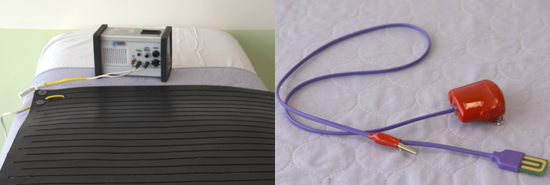
Figure one: The two types of bedwetting alarms bell
and pad alarm (left) and personal (body-worn) alarm (right).
It can take six to eight weeks for a bedwetting alarm to work. During this time, it is important to be patient and support your child. Alarms work best if your child is keen to use them, so try to keep them motivated. If your child is constipated, you
will need to treat their constipation, or the alarm treatment may not work.
There are two types of bedwetting alarms: bell and pad alarms and personal (body-worn) alarms.
Bell and pad alarm
Most bell and pad alarms have two main parts: an alarm unit and a soft rubber mat that goes on the bed. When the alarm unit is plugged into the mat, it will make a ringing sound when it detects pee.
Using a bell and pad bedwetting alarm
- Place the pad on your child’s bed, where their bottom will be when they lie down, and cover it with a thin sheet or pillowcase. Then, take the electric leads and plug them into the mat and the alarm unit.
- Put the alarm unit near the bed – close enough for the leads to connect, but far enough away that your child will have to get up to turn it off.
- Ask your child to turn on the alarm themself when they go to bed.
- The alarm will ring when your child wets the bed. They should get up, turn off the alarm, and go to the toilet to finish urinating (peeing).
- For the first few nights, you may need to help them wake up. However, your child must be the only one to turn off the alarm.
- Even if they do not feel like they need to pee anymore, they should still get up and go to the toilet.
- When your child returns, they should dry the mat, put a new sheet on it, turn the alarm back on, and go back to bed. You can give verbal instructions, but do not reset the bed for them.
- Repeat this process if they wet the bed for a second time. It is best to turn off the alarm after the second time and try again the next night.
- Use the alarm for eight weeks. Within a week or two, your child should start to have some nights when they do not wet the bed. This may happen because they wake up and go to the toilet before wetting the bed, or because they learn to hold on all
night.
- When your child has 14 dry nights in a row, try giving them some extra liquid to drink at night for seven nights. This is called ‘overlearning.’
- You can leave the mat on the bed after 14 dry nights, but do not switch on the alarm to see what happens. Try taking the mat off the bed completely if the dry nights continue.
- You may want to speak with your child’s doctor or a continence specialist if your child’s bedwetting is not improving after four weeks.
Personal (body-worn) alarm
Personal alarms are smaller devices. They usually have a sensor that attaches to the outside of your child’s underpants and a small alarm unit that clips onto your child’s pyjama top. The two parts are connected by a cord that sits under your child’s
top. When the sensor gets wet, the alarm will ring and/or vibrate. There are also wireless personal alarms where the sensor is separate from the alarm unit.
Using a personal (body-worn) bedwetting alarm
- Connect the alarm unit to the sensor. Then, clip the unit onto your child’s pyjama top near their shoulder and thread the cord under their top.
- If you are using a wireless personal alarm, place the alarm unit near your child’s bed but far enough away that they must get up to turn it off.
- Attach the sensor to the outside of your child’s underwear where the wetting will happen. Then, get your child to put another pair of underwear over the top to keep the sensor in place.
- The alarm will ring and/or vibrate when the sensor gets wet. Your child will need to get up, remove the sensor, and press the reset button on the alarm unit. You can offer help, but they must learn to do it themself.
- Pressing the reset button without removing the sensor from the underwear will not stop the alarm.
- Your child should then go to the toilet to finish urinating (peeing).
- For the first few nights, you may need to help them wake up.
- Even if they do not feel like they need to pee anymore, they should still get up and go to the toilet.
- When your child returns, they should change into new undies and pyjamas. You can then help them put new sheets on the bed.
- Encourage your child to reattach the alarm and sensor themself before going back to bed.
- Repeat this process if they wet the bed for a second time. It is best to turn off the alarm after the second time and try again the next night.
- Use the alarm for eight weeks. Within two or three weeks, your child should start to have some nights when they do not wet the bed. This may happen because they wake up and go to the toilet before wetting the bed, or because they learn to hold
on all night.
- If your child has seven dry nights in a row, try giving some extra liquid to drink at night. This is called ‘overlearning.’
- You may want to speak with your child’s doctor or a continence specialist if your child’s bedwetting is not improving after four weeks.
Bedwetting medicines
Most children who wet the bed do not need to take medicine. A doctor may suggest medicine if bedwetting alarms have not helped your child.
Desmopressin is a medicine that treats bedwetting by helping the body make less urine at night. It is safe for children over six years. If your child’s doctor prescribes desmopressin, it is important to follow their instructions. Desmopressin is not a
long-term fix for bedwetting; it is temporary and usually only stops bedwetting on the nights it is taken.
When to get help
|
See a doctor or health professional if:
|
- you and/or your child are very upset or frustrated by the bedwetting.
- your child stops bedwetting but starts again after a few months.
- your child snores or has other symptoms of obstructive sleep apnoea (OSA).
- your child is constipated.
- your child has symptoms of a urinary tract infection (UTI), such as pain or burning while peeing (urinating).
- your child wets themselves during the day.
- your child is not improving after using a bedwetting alarm for four weeks.
|
|
Look after your child at home if:
|
- they are under age seven.
- they are not upset or frustrated by the bedwetting, and you feel comfortable managing it.
- they are wetting the bed less while using a bedwetting alarm.
|
Common questions about bedwetting
When should I get help for my child’s bedwetting?
There is no exact time when you should get help for your child’s bedwetting, as every child is different. Many children wet the bed when they are young but stop naturally over time. As a guide, there is usually no need to treat your child’s bedwetting
if they are under age seven unless they have signs and symptoms of other medical conditions, or the bedwetting makes them very upset. If your child is seven years or older and they are still wetting the bed, it may be time to consider
treatment.
You do not need to treat your child’s bedwetting if you have just started toilet training them and they are still wetting the bed.
Is bedwetting a sign of bad behaviour?
Bedwetting is not a sign of bad behaviour, and children do not it for attention. Children who wet the bed have little control or awareness that they are doing it, and are often upset or embarrassed about it – especially as they get older.
My child is toilet-trained. Why are they wetting the bed?
Bedwetting is not caused by poor toilet training. There are many reasons why children may wet the bed, including being a heavy sleeper, having a naturally small bladder, or making a lot of urine (pee) at night. Bedwetting often runs in families.
When will my child grow out of bedwetting?
All children develop at different rates; some may never wet the bed, while others may do it from time to time until they are seven or eight years old.
Where can I get a bedwetting alarm from?
You can hire a bell and pad alarm from The Royal Children’s Hospital Enuresis clinic if your child has a referral. First, you and your child will need to meet with a continence nurse and receive some training.
Bedwetting alarms are also available for hire or purchase through other health care services, online and at pharmacies.
When should I stop putting my child in night nappies?
You may want to stop putting your child in night nappies or pull-ups when you notice they are wetting them less often. Children tend to develop bladder control in the daytime by around age four, but many do not have control at night until they
are five to seven years old.
When transitioning your child out of night nappies or pull-ups, it is a good idea to make sure they go to the toilet before bed. You should also remind them that they are wearing underwear, not a night nappy.
Are bedwetting alarms dangerous?
Bedwetting alarms are not dangerous. They operate at low voltage, so there is no risk of your child getting electrocuted.
My child has school camp coming up. How can I stop them from bedwetting at camp?
To help your child stop bedwetting before camp, it is best to start using a bedwetting alarm at least two months before. This is because they can take time to work.
If the bedwetting alarm does not work in time, your child’s doctor may be able to prescribe them medicine for their time at camp. You could also use underwear pads.
For more information
Developed by The Royal Children’s Hospital General Medicine department. We acknowledge the input of RCH consumers and carers.
Reviewed July 2026
Please always seek the most recent advice from a registered and practising clinician.