Key points
- Your child needs to stop eating and drinking before surgery to keep them safe; this is called fasting.
- It is important to follow the fasting instructions from your child’s treating team, or their surgery may need to be delayed or rescheduled.
- Your child can have breastmilk up to three hours before their surgery, and formula up to four hours before their surgery.
- You can give your child small sips of clear liquids like water, clear juice and cordial, until they are called for surgery. A doctor or nurse will tell you to stop. Do not give them dairy milk.
- Your child cannot eat any food at all for at least six hours before their surgery. This includes lollies and snacks.
- If you have any questions about fasting, speak to your child’s surgical team.
What is fasting?
Fasting means not eating anything for a period of time.
If your child is having surgery where they are put under a controlled sleep (general anaesthesia), they will need to fast before their procedure.
Fasting before surgery
Why does my child need to fast?
Fasting before surgery is very important to keep your child safe. The medicine that helps put your child to sleep makes it harder for them to protect their airway. If they have any food in their stomach, they can breathe it in and risk serious complications
such as pneumonia.
When should my child start fasting?
A doctor or nurse will tell you exactly when your child needs to stop eating before their surgery. It is usually a member of their surgical team, such as a nurse or an anaesthetist – the doctor who keeps your child asleep, comfortable, and safe
during surgery.
If you have any questions or concerns about fasting, speak with your child’s surgical team.
Fasting guidelines for children and young people
There are different fasting guidelines for food solids and milk products, including breastmilk. This is because food and milk take longer to digest than clear liquids.
Here are The Royal Children's Hospital (RCH) fasting guidelines:
- Clear liquids: Your child can have small sips of clear liquids when they are thirsty, up until a doctor or nurse tells you to stop. This includes water, clear apple juice (no pulp), electrolyte drinks, and icy poles.
- Breastmilk: Stop giving your child breastmilk three hours before their surgery.
- Formula: Stop giving your child formula four hours before their surgery. This includes infant, toddler, and stage two formula.
- Food and other drinks: Stop giving your child food and other drinks six hours before their surgery. This includes lollies, ice cream, other milks (dairy and non-dairy milks), and thickened drinks like smoothies.
If your child is having surgery at the RCH, you must follow these rules. Otherwise, their surgery may be delayed or rescheduled to another date.
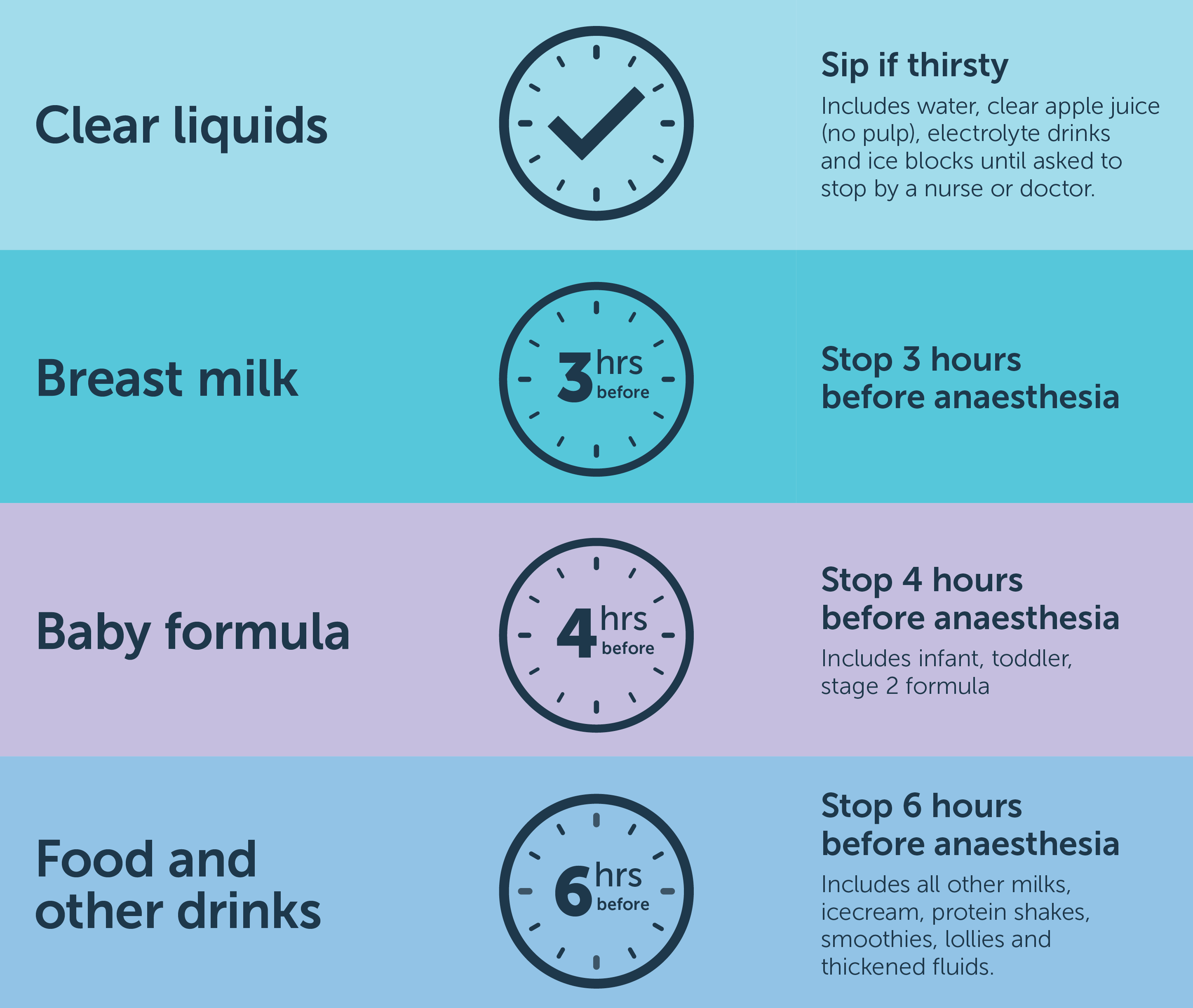
Figure one: Table showing your child should stop eating and drinking before surgery.
Clear liquids
Clear liquids are see-through drinks, with no chunks or bits.
Your child can have small sips of clear fluids when they are thirsty, until a doctor or nurse tells you to stop.
Some clear liquids are:
- Water
- Clear juice, such as pulp-free apple juice
- Cordial
- Glucose or sugar water.
Note: Orange juice, dairy or non-dairy milks, jelly, broth coconut water, and fizzy drinks are not clear liquids.
Medicines
Your child should take their regular medicine on the day of surgery unless their doctor says not to. They should take any medicines with clear liquid like water.
If your child takes blood thinners (like aspirin) or medicine for diabetes (like insulin), ask their doctor about how to manage these medicines at least two weeks before surgery.
Emergency surgery
For emergency surgeries, a doctor or nurse will tell you when your child should stop eating and drinking. Things can be different in these cases.
Food and drink after surgery
Children are usually able to eat and drink soon after surgery; a doctor or nurse will confirm this with you.
It is usually best to give your child water, clear apple juice, or a lemonade icy pole before restarting their usual diet. Most babies can have breastmilk or formula.
Some children may not be able to drink or eat straight away, so they will get fluids through an intravenous (IV) line into a vein.
Common questions about fasting for surgery
Can I give my child mints or chewing gum before their surgery?
Avoid giving your child mints and chewing gum before their surgery. They can cause your child to make and swallow lots of saliva, increasing their stomach fluids. These fluids are acidic; if your child breathes them in during surgery, the acid
may damage their lungs. Speak with a doctor or nurse if you have any questions.
Are foods like jelly and icy poles considered clear liquids?
Most icy poles are made of frozen clear liquids, but it is best to check with a doctor or nurse before giving one to your child. Milky ice creams on sticks are not clear liquids. Jelly is made from protein (gelatin). It is not a clear liquid and
will stay in the stomach for a few hours.
Which clear liquid is best for my child to drink before their surgery? Should I give them water instead of sugary drinks?
Water, clear apple juice and cordial are all suitable drinks for your child before surgery. Clear apple juice and cordial may make your child feel less hungry. You can also offer water with a small amount of sugar mixed in.
Can my child brush their teeth when fasting for surgery?
Your child can brush their teeth when fasting, but they should not swallow any toothpaste.
For more information
Call an ambulance (000) immediately in an emergency.
Developed by The Royal Children’s Hospital Anaesthesia and Pain Management department. We acknowledge the input of RCH consumers and carers.
Reviewed July 2026
Please always seek the most recent advice from a registered and practising clinician.