Craniofacial and microtia program
Treatment for Craniofacial conditions involves the comprehensive treatment of children with congenital defects (birth defects) affecting their mouth, face and skull. Many craniofacial conditions are rare and our department is a major referral centre for these sorts of conditions from across Australia and Asia, making our experience with these conditions one of the broadest in the world. Every year we manage about 200 new patients with various types of craniofacial disorders.
Craniofacial birth defects can be varied, but usually involve some aspect of an abnormally shaped skull. As the child grows, many different parts of the face may be influenced by a craniofacial problems or an abnormally shaped skull. Therefore, care of a craniofacial child involves a coordinated group of professionals who follow these children from birth until the completion of growth (early adulthood). That team consists of: plastic surgeons, maxillofacial surgeons, neurosurgeons, pediatricians, geneticists, dentists, orthodontists, ENT surgeons, speech therapists, audiologists, psychologists and ophthalmologists. Our team is committed to being at the forefront of every aspect of craniofacial treatment.
Conditions managed by our craniofacial team:
- Craniosynostosis – this is a rare condition but the most common condition that our craniofacial team treats. It involves premature fusion of one or more bones of the skull and affects how a skull grows. In simple cases only the head shape is affect but in more complex/syndromic cases the growth of the face is affected
- Crouzon and Apert syndrome – extremely rare genetic forms of craniosynostosis
- Hemifacial (craniofacial ) microsomia – a condition involving underdevelopment of the jaws and/or ears
- Treacher Collins syndrome – a rare, inheirited craniofacial condition affecting the eyelids,jaws, facial bones and/or palate
- Facial Clefts – birth defects involving a separation or split in formation of parts of the face
- Neurofibromatosis – a rare condition involving tumours of the nerves of the skin and face and causing facial deformities.
3-Dimensional Camera
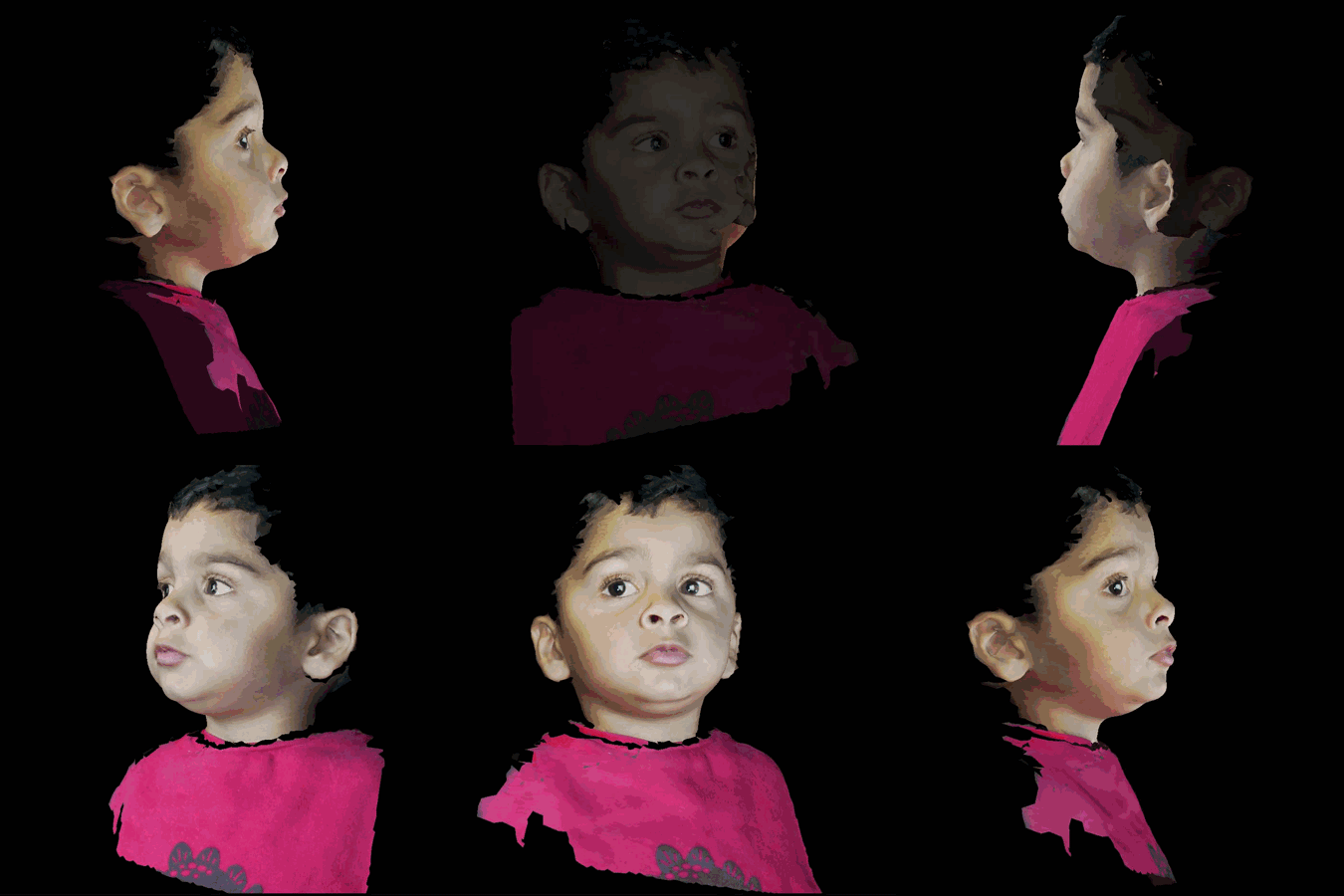
A new paradigm in surgical planning and research
The Department and Educational Resource Centre have recently upgraded the 3-dimensional camera system with a donation very generously provided by the Muriel and Les Batten Foundation. Our surgeons will use this advanced technology to view and assess 3d images of patients to assist in their planning, auditing and assessment of patients. The RCH is the first hospital in Australasia to use this technology.
Craniofacial Research
Our team is fortunate to be supported by the Murdoch Childrens Research Institute and the University of Melbourne, Jigsaw Professor of Paediatric Plastic and Maxillofacial Surgery, Professor Tony Penington. The integration of clinical care, research and training in to the RCH Craniofacial service helps us to continue to improve the quality of care we provide to children born with craniofacial disorders.
For referrals or more information please contact our Craniofacial nurse coordinator on 03 9345 6582
Craniofacial Clinic
Our Craniofacial Clinic provides complete care and treatment for children with all types of craniofacial disorders. This includes children with birth defects, deformity following trauma, or craniofacial growth disorders. Our team brings together health professionals from many different fields to ensure that patients and their families receive the best care. The team consists of plastic surgeons, maxillofacial surgeons, dentists, ophthalmologists, anaesthetists, geneticists, orthodontists, photographers, orthotists (helmet remodelling), psychiatrists, social workers and specially trained nursing staff, both in theatre and the wards.
Microtia Program
Microtia is a condition involving a small or absent ear with or without a narrow or absent ear canal ( atresia ). It is a condition present from birth and can appear on its own or as part of a craniofacial syndrome such as Goldenhar syndrome, hemifacial microsomia or Treacher Collins syndrome. Microtia can affect one ear only (unilateral) or both ears (bilateral). Microtia affects about 1 in 6000 babies. Only a small number of centres internationally have the expertise to manage microtia and our department is a major referral centre for patients from all over Australia and Asia.
Microtia Clinic
Our Microtia Clinic was developed by the Department of Plastic and Maxillofacial Surgery in conjunction with the Department of Otolaryngology. The clinic is run monthly and over 100 patients per year with microtia and other forms ear deformities.This specialist clinic enables world-class combined approach to treating patients with microtia and other complex ear abnormalities. The clinic is staffed by plastic surgeons, ENT /otologists, and a specialist nurse coordinator. Download
Microtia and Ear Anomalies booklet.
For referrals or more information please contact our Microtia Nurse Coordinator on 03 9345 5391
Clinical Lead - Jonathan Burge
 |
Microtia Clinic
Our Microtia Clinic was developed by the Department in conjunction with the Department of Otolaryngology. This specialist clinic enables a combined approach to treating patients with Microtia (underdeveloped or no ear) and other complex ear abnormalities. The clinic is staffed by plastic surgeons and ear, nose and throat surgeons. For more information, visit the
Microtia Australia Support Group website. Download
Microtia and Ear Anomalies booklet. |
Hand and microvascular surgery program
The Hand and Microvascular Surgery Programme provides the full range of reconstructive surgery and rehabilitation services for patients with hand and upper limb problems that are either due to:
- congenital anomalies - hand and upper limb problems present at birth
- injury or burns,
- infection or
- tumours.
Congenital anomalies are a broad group of conditions, with some of the more common problems assessed and treated through the programme being:
- syndactyly (webbed fingers)
- trigger thumb and fingers
- hypoplastic (underdeveloped) or absent digits
- polydactyly (duplicate or extra digits)
- arthrogryposis (joint contractures)
Hand and upper limb trauma is common in all age groups of children and through referral from the Emergency Department, other hospitals or via the Hand Outpatient clinic, the Hand and Microvascular Programme treats acute hand and upper limb injuries as well as providing a tertiary referral centre for reconstructive surgery for the consequences of injury. A specialized clinic for the treatment of Brachial plexus injuries also exists to provide multidisciplinary care for these patients.
Infections of the hand are common and are treated by the programme in conjunction with the Infectious Disease department of the RCH.
Tumours of the hand and upper limb are uncommon in children. The Hand and Microvascular Surgery programme has experience in managing these conditions and together with the Orthopaedic Surgery and Oncology departments, offers a Multidisciplinary Team approach for dealing with complex tumours of the limbs.
Referral to the Hand and Microvascular Surgery Programme is usually via the Hand Clinic, the Brachial Plexus clinic or in emergency cases either directly via the Plastic Surgery Registrar, or Emergency Department.
The Hand Outpatient Clinic is staffed by plastic surgeons, hand therapists and nurses, all trained in the care of the children with conditions of the hand and upper limb. The clinic offers the opportunity for combined assessments from the staff in the clinic and the development of treatment plans for the range of conditions from the relatively straight forward to the complex and rare.
The Facial Palsy clinic is part of the microsurgery program and looks after children with both congenital and acquired facial palsy. There are a variety of causes of facial palsy and these can be unilateral or bilateral. This multidisciplinary clinic provides both medical and surgical options of care in a caring and understanding environment utilizing the most up to date analysis systems and procedures to help to restore facial symmetry.
The Hand and Microvascular Surgery Programme aims to provide a tertiary referral service for the treatment of upper limb conditions as well as offering a specialized service for children requiring reconstructive microvascular surgery. As a part of this service, there is an educational programme for Post graduate fellows in Paediatric Hand and Microvascular Surgery and Advanced Trainees in Plastic Surgery. The Programme also is active in clinical research in this specialized area of surgery.
Clinical Lead -
David McCombe
 |
Brachial Plexus Palsy Clinic
The Brachial Plexus Clinic is a multidisciplinary clinic that is situated in the Allied Health Department of the RCH and treats infants and older children who have suffered injury to the Brachial Plexus, (the network of nerves that connects the upper limb to the Spinal cord).
The clinic team includes Plastic and Orthopaedic Surgeons, Physiotherapists and Occupational Therapists and offers initial assessment and ongoing followup for these children. Information about this condition can be found in the Understanding Brachial Plexus Palsy booklet |
 |
Saliva Control Clinic
Drooling can be seen as a manifestation of many conditions. For example, approximately 10% of patients with cerebral palsy suffer from drooling (sialorrhea). Drooling is normal in very young infants and toddlers, but in intellectually intact older children, it can have significant impact. Soiling of clothes and surroundings can cause emotional isolation and even physical problems with oral maceration and dehydration.
Treatment options include a range of interventions. For some patients, no treatment is an appropriate recommendation. Young patients with no significant medical complications, good oral motor skills, who may improve with further maturation, can be carefully followed. Patients with a low cognitive level or significant
physical problems with a poor outlook for change may require other interventions.
For some patients in whom other interventions are unsatisfactory, surgical intervention may be required. The most common procedure for the control of sialorrhea involves rerouting the ducts of the submandibular salivary glands to the tonsillar fossa. This reroutes the majority of the salivary flow posteriorly in the oral cavity allowing better control of sialorrhea through swallowing. Download
Saliva Control In Children booklet. |
General Paediatric Plastic Surgery
A wide variety of problems can occur in children, from newborns to young adults. Conditions not managed by other programs are treated by the General Paediatric Plastic Surgery Program. Some are emergency cases and these are seen first in the Emergency Department. Other conditions such as scars, birthmarks, lumps,prominent ears or ears of unusual appearance, breast development in boys and breast asymmetry or hypertrophy in girls can be seen at a consultant clinic.
Note for referring doctors
The waiting list for clinics can be long. If you believe the patient need to be seen urgently please note this on the referral form or contact the on-call plastic surgery unit registrar.
There is little point in seeing children with prominent ears before the age of five. For numerous reasons most surgeons will not operate until after this age. One exception is prominent or deformed ears in newborns. Sometimes splinting these ears can reduce long- term deformity and the need for surgery. One product is easily found on a web search and available in Australia.
In general we will not place young adults on the waiting list if they are older than 17.5. An exception is made for some referrals from other units and for patients in other programs where surgery after this age will complete their treatment course.
Clinical Lead -
Kirstie MacGill
Cleft Lip and Palate Program
Every 3 minutes, somewhere in the world, a baby is born with a cleft of the lip and/or palate making it one of the most common birth defects. In these children, there is a separation through the upper lip to the nose and often also through the upper jaw and along the palate. In Victoria, approximately 120 infants are born every year with this type of anomaly, the cause of which remains unclear. The care of these infants commences ante-natally (if the diagnosis is made by ultrasound) and continues from birth through to adulthood. A large team of clinicians including plastic, maxillofacial and ENT surgeons, speech pathologists, audiologists, paediatric dentists, orthodontists, paediatricians, specialist nurses, geneticists, pyschologists and social workers work together as a team to provide the best care possible. While the quality of the primary surgical repair is such that many children have good function and little or no scarring, ongoing management of speech, teeth and jaw position is often required until the completion of growth.
At the RCH, care for children with a cleft is co-ordinated through our specialist cleft nurse consultant who is experienced in providing information and support to new parents at the time of diagnosis and throughout the entire care pathway. We work closely with the other specialist paediatric services on the RCH campus to integrate the management of each child's cleft-related issues with their general development. The RCH Cleft service is always looking to improve the quality of care we provide to children with clefts of the lip and/or palate and their families. We work closely with the
Murdoch Children's Research Institute, the University of Melbourne, Jigsaw Professor of Paediatric Plastic and Maxillofacial Surgery and with
CleftPALS Victoria, the family support group. The integration of clinical care, research and training in the RCH Cleft service helps us to continue to improve the quality of care we provide to children with clefts of the lip and/or palate and their families.
Every year over 100 new children join our service, attending with their parents at any age from the time of diagnosis (be that ante-natally or post birth) through adolescence to adulthood. While we are not able to look after adults who have a cleft of the lip/palate, we are always happy to help adults find the most appropriate healthcare provider.
For further information or to make a referral please contact Pru Talbot, Cleft Clinical Nurse Consultant on 03 9345 6595 or pru.talbot@rch.org.au
www.cleftpalsvic.com
More in-depth information on Cleft Lip and Palate
Clinical Lead -
Nicky Kilpatrick
Oral and maxillofacial surgery
Oral and maxillofacial surgery:
- Oral & Maxillofacial Surgery (OMS) is unique in that specialists require a dual qualification in medicine and dentistry with a minimum of one year of surgical rotations in related specialties prior to 4 years of advanced training in the specialty.
- OMS is often seen as the bridge between medicine and dentistry, treating conditions that require expertise from both backgrounds that include defects, injuries and aesthetic aspects of the mouth, jaws and teeth. The range of conditions managed include facial disproportion and malocclusion, impacted teeth, cysts and tumours of the jaws as well as oral mucosal ulcers and infections, upper airway obstruction related to small jaws, salivary gland diseases and temporomandibular joint disorders
- The paediatric and adolescent oral & maxillofacial program at The Royal Children's Hospital of Melbourne cares for children and adolescents born with congenital, developmental and acquired oral and facial deformities as well as managing the oral and maxillofacial surgery needs of patients with other complex medical conditions as part of a multi-disciplinary team.
- As a tertiary teaching hospital, this clinical program provides teaching for undergraduate students, residents, specialist trainees and Fellows who are gaining specific knowledge in paediatric OMS.
Oral and maxillofacial clinic:
- The OMS clinics manage conditions related to the mouth and jaws in infants, young patients up until growth is complete.
- Children born with small jaws (micrognathia) may be at risk of airway obstruction and techniques for jaw lengthening are undertaken to resolve this condition to facilitate normal growth and development
- Corrective surgery for malalignment of jaws is a major part of the OMS program requiring close integration with orthodontic care.
- Patients with cleft lip & palate and craniofacial microsomia account for the most common congenital conditions requiring skeletal correction to provide facial symmetry with normal jaw function, speech and breathing.
- Tumours, cysts and related pathology of the maxillofacial region in children differ from the spectrum in adult disease and are managed with future growth in mind.
- Facial fractures in children and adolescents are managed with specific expertise and consideration to future growth, development and function of the structures affected. The Royal Children's Hospital is a level one trauma centre for children in Victoria. In cases of multi-trauma, our team works closely with other team members to ensure patients are cared for in a sequential and timely manner to ensure best possible outcomes.
- With an active dental/orthodontic program at the hospital, the clinic manages referrals for the surgical removal of, or exposure of impacted teeth
- The philosophy of our service is to provide the highest level of care as an integrated component of a multidisciplinary team approach.
Clinical Lead -
Jocelyn Shand